

THE FAMILY DOG HELPLINE
Bakers Acres Dog Blog
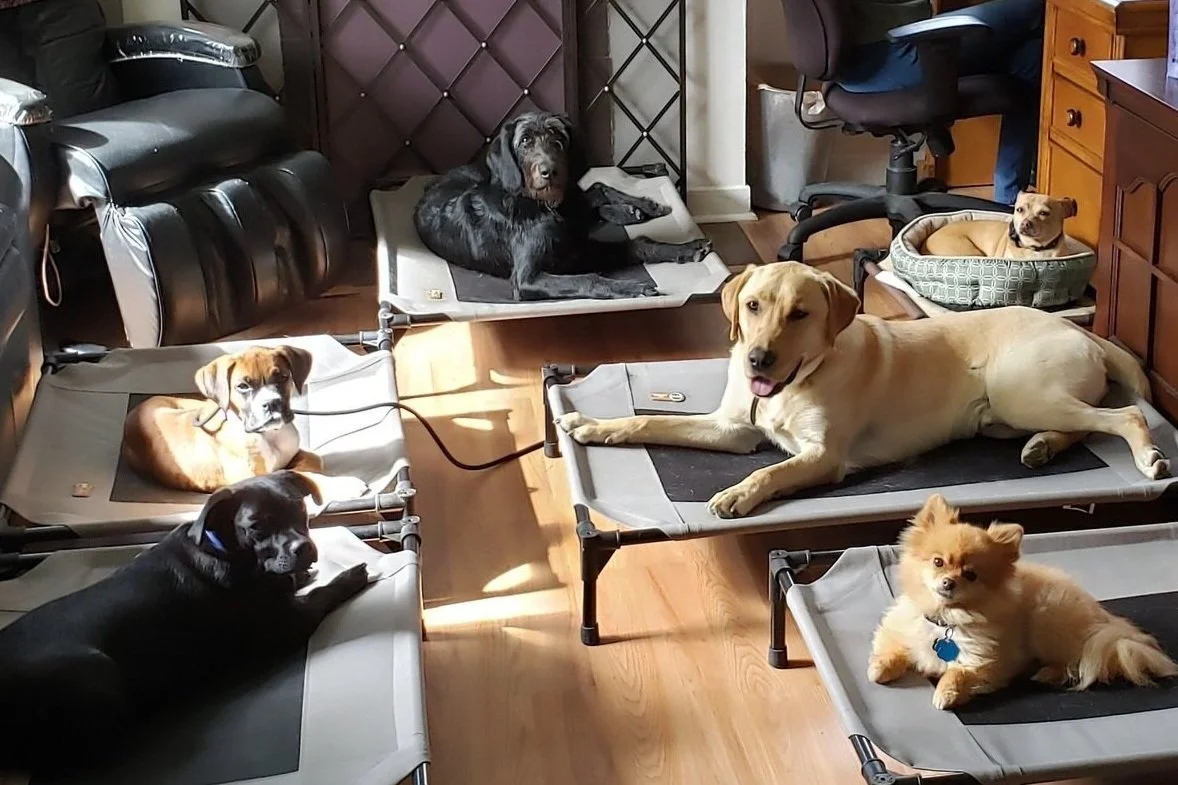
TRAINING VIDEO: How To Teach Your Dog Self Control
Your dog is capable of more than you give them credit for. Raise the bar and hold them accountable to be better, well-mannered, contributing members of society. If your dog's impulse control has slackened, here's some homework to follow up on.
In this one video you'll see how we teach these dogs:
self-control,
patience,
good table manners,
and to wait their turn.
If your dog's impulse control has slackened, here's some homework:
Step 1: Get some treats or your dog's daily food.
Step 2: Wait for your dog to show proper etiquette: quiet, calm, soft but direct eye-contact.
Step 3: Offer the food, but be ready to refuse it if your dog breaks etiquette, i.e.: barks or whines, jumps up or grabs at the food in your hand, gets distracted or demanding.
Step 4: If they maintain good manners, let them eat the treat in peace and skip to Step 6.
Step 5: If they break etiquette, take back the treat and say "eh eh" and start back at Step 1. Repeat as necessary until your dog shows good manners.
Step 6: Apply these steps to every aspect of your life with your dog, i.e.: getting the leash on to go for a walk, heading out the door, making dinner, greeting you when you get home from work or school, walking around the block.
Your dog is capable of more than what you give them credit for. Raise the bar and hold them accountable to be better, well-mannered, contributing members of society.
If you have more questions or curiosities about training, please, book a free consultation!
Comment below with what you've done to help your dog with self control or share with a friend who needs help.
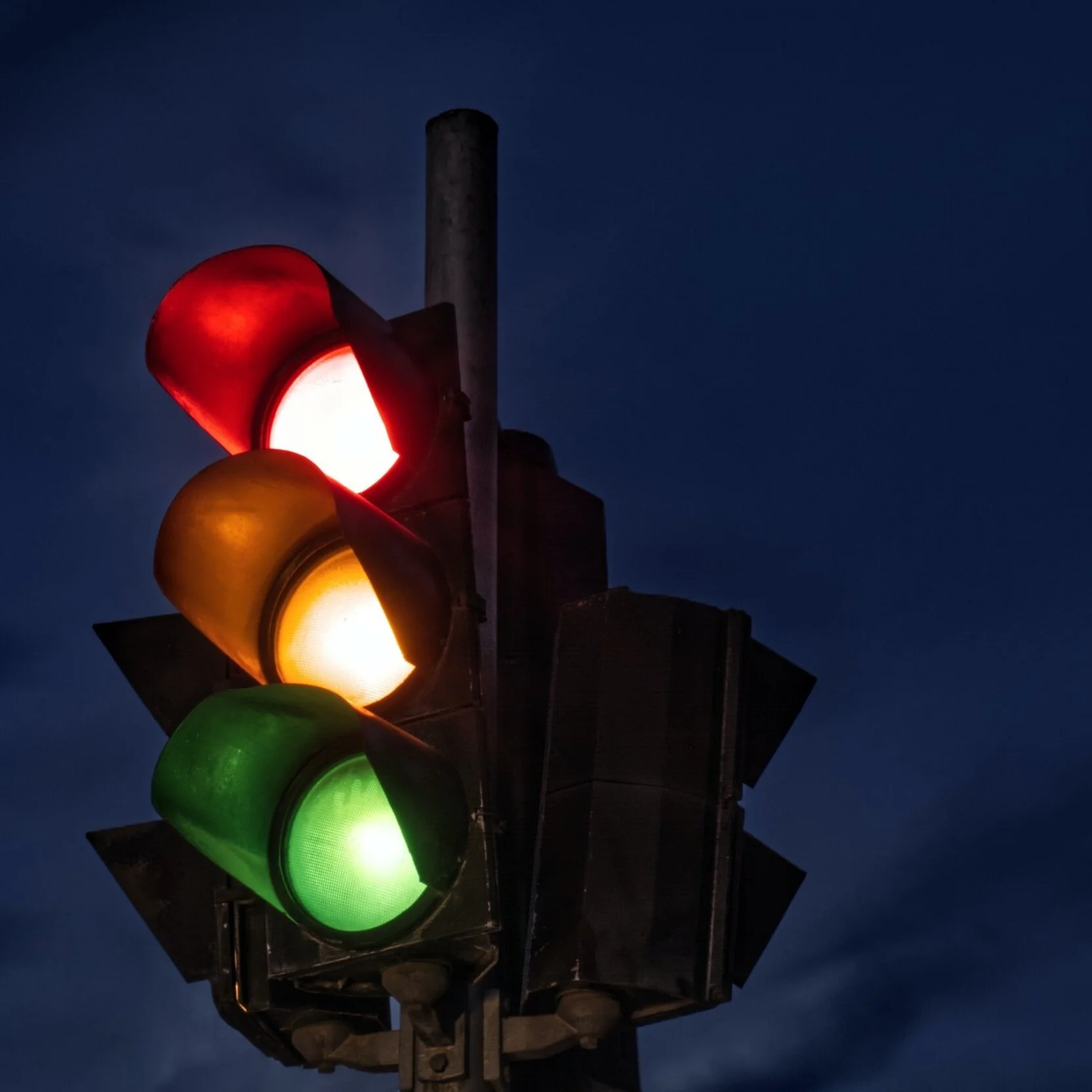
The Traffic Light Principle
As you pull up to the traffic light, it switches from green to yellow.
What do you do?
Keep going and hope you make it through the intersection before it turns red, taking a chance that you won’t hit someone or someone else won’t hit you?
Or do you stop and wait for the light to turn back to green?
As you pull up to the traffic light, it switches from green to yellow.
What do you do?
Keep going and hope you make it through the intersection before it turns red, taking a chance that you won’t hit someone or someone else won’t hit you?
Or do you stop and wait for the light to turn back to green?
As long as the light is green, you know you can keep going with little to no consequences other than getting to where you want to go within the timeframe you planned. But when the light changes from green to yellow, now you must make a choice. If you stop, you might be late. If you speed through, you might get pulled over if you’re caught or you might cause a fatal accident. It is in that moment of choice that true teaching happens.
Training your dog is like a traffic light
Green light means “you’re doing great, keep doing what you’re doing.” This is the positive side of dog training, the 90% when we reward our dogs for good behavior, usually in the form of treats, toys, affection, and “good boy”.
Yellow light means “caution, you might want to stop and think about what you are doing.” This is the negative side of dog training, the 9% when we teach our dogs to think before they act and give them constructive, informative, and corrective feedback to change their behavior before they do something they or we will regret.
Red light means “STOP NOW or you will face the consequences.” This is the non-negotiable side of dog training, the 1% when we must stop bad behavior that will harm our dogs or others.
When your dog pulls up to the traffic light and it switches from green to yellow or yellow to red, keep this mantra in mind: “Be as fair as you can be, but as firm as you need to be.”

Will my dog listen without the e-collar?
Hey Sara, do you know if there’s a way to have a dog not be e-collar savvy? My dogs do behave better when they know their e-collars are on, but is there ever a time when they don’t need it anymore or is there a way to get them to listen without it?
QUESTION
Hi Sara! I hope you’re having a beautiful day today. I have a question that I’d like to hear your perspective.
Do you know if there’s a way to have a dog not be e-collar savvy? My dogs do behave better when they know their e-collars are on, but is there ever a time when they don’t need it anymore or is there a way to get them to listen without it?
ANSWER
Hey […]! Let me see if I understand your question.
Can a dog eventually be reliable and trustworthy without the e-collar on? Or, can you ever prevent dogs from becoming e-collar savvy?
The answer to the first question is yes. Humans have been teaching dogs for eons without e-collars. However, for the best results you should start early during the imprinting stage, and it typically takes 10 times as long and even then there is always a slight 1% chance your dog will decide it's worth it to give you the middle finger.
The answer to the second question is “maybe”, but most likely “no”. Take our own behavior for example. Why do we drive 5-20 mph over the speed limit when we all know it's against the law, but drive 5-10 mph under the speed limit when there's a highway patrolman in sight?
Just let that sink in. And I'll leave the decision to use or keep using the ecollar up to you.

Kids & Dogs | Non-Negotiable Rules
There are a lot of GOOD dogs out there that had a BAD day that ended up killed because we were so certain "my dog would never bite my child."
Why take the risk?
Article Written by Bakers Acres Founder: Sara Baker, owner of Bakers Acres K9 Academy & Contributing Author: Katherine McCarter, owner/head trainer at Rock Star Dogs
Dog Training Baby tip...When kids and dogs are in the same space, SUPERVISE, but also be aware of what could happen. Don't put all the responsibility to be good on the dog, especially when your baby is in their space, in their face, pulling their hair or ears, jumping on their back, etc. Teach your kids to be respectful of the dog and teach your dog to give your kids space.
This might sound harsh, but we actually never allow any interaction whatsoever until the "baby" (actually a toddler) is old enough to follow instructions and dog is proficient at obedience and manners. Yep, that means for the child there is no petting, patting, sitting on, giving treats, pulling on ears or tails, stealing toys, etc. For the dog that means there is no licking, babysitting, eating from baby's hand or high chair, stealing toys, etc. NO INTERACTION OR CONTACT. PERIOD!
Why so dramatic? Well, here's a few stats to look over...Stop The 77
If you are expecting, consult with a canine professional asap, even if your dog is already super awesome around kids. Be prepared and take the steps necessary to protect your child and your dog. There are a lot of GOOD dogs out there that had a BAD day that ended up killed because we were so certain "my dog would never bite my child."
Why take the risk?
Below is our MUST FOLLOW rules for every household in which dogs and kids live together or visit regularly.
NON-NEGOTIABLE RULES
SEPARATION: ALWAYS have separation in place. In the beginning, the baby is separated (in the nursery, in the crib, in a sling/baby carrier, in the highchair), then as the child becomes more mobile (crawling, toddling) the dog will be separated (in a crate/kennel, on a dog bed, in the laundry room). Do not leave the child in same room as the dog, even for a few seconds.
SAFE PLACE: Establish a safe place for the dog to hang out and allow the dog to retreat on their own if they ever feel cornered, anxious, overwhelmed, and especially when they are enjoying a chew toy or eating their food. This can be in their own crate, in a room away from the child so no little fingers can find their way into the crate.
PERSONAL SPACE: absolutely never allow the dog near the baby when changing diapers, while the child is eating in the highchair and especially when the child is wandering around with food in their hands.
SUPERVISE: When the child is old enough to begin interacting (2-3 years of age), supervise at all times and have a leash on the dog.
Share this post with a friend who is expecting or might already have kid/dog issues and needs help asap!