

THE FAMILY DOG HELPLINE
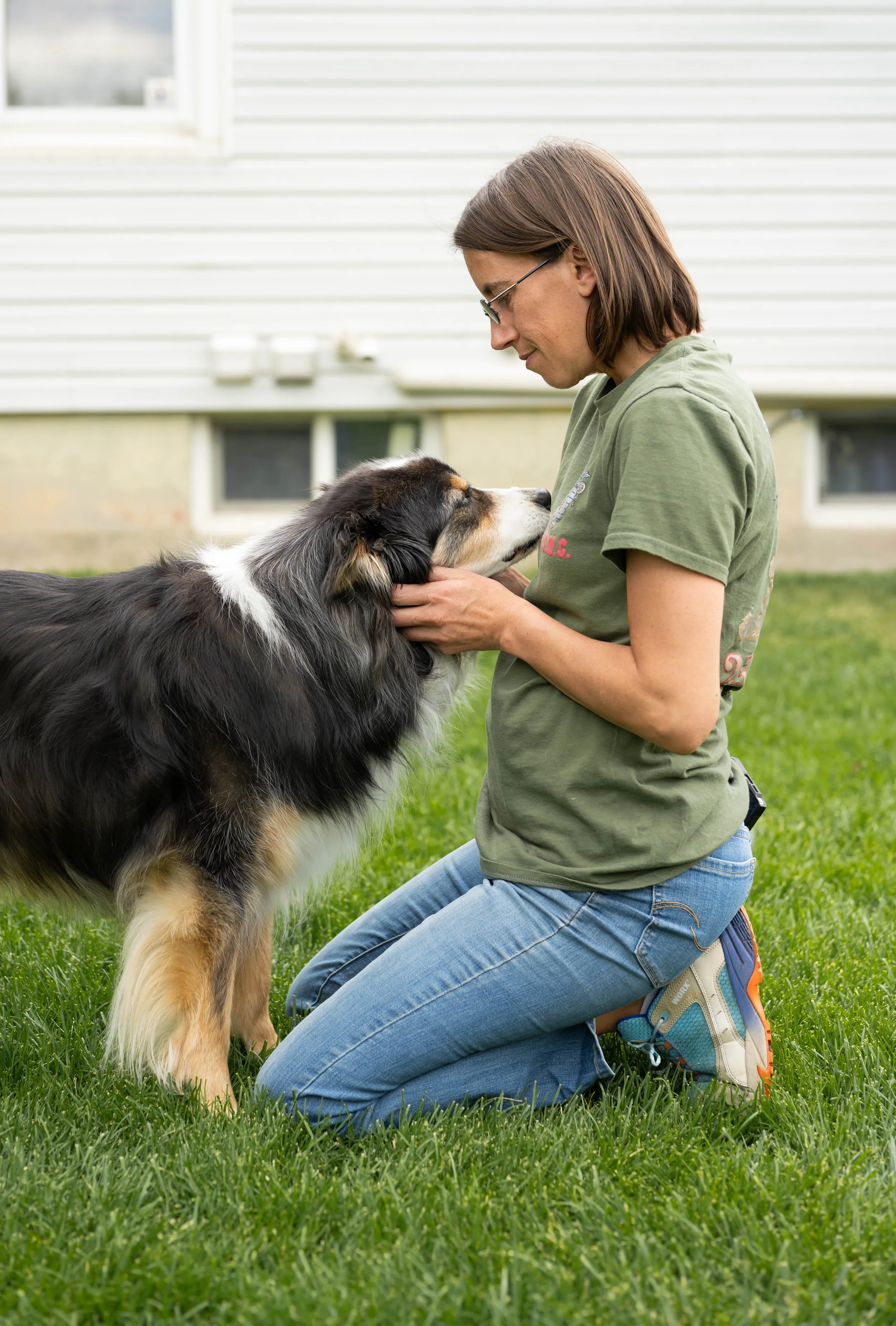
Patience: One of the Most Important Tools in Dog Training
Training isn’t just about teaching your dog. You are also learning how to communicate with your dog.
You have to be patient while your dog figures out what you are asking, but you also have to be patient while you learn how your dog learns best.
Teaching a dog a new skill takes more than simply showing them what you want and expecting them to understand. One of the most important things we can bring to training is patience.
Think about it from your dog’s perspective: they have no idea what you are asking them to do. We may know exactly what we want them to do, but our dog has to figure it out through trial and error.
Sometimes that process is messy.
Your dog may try sitting, lying down, pawing at you, looking away, or offering every other behavior they know has made you happy in the past. They aren’t necessarily being stubborn or refusing to listen. They may simply be trying to figure out, “What does my person want me to do?”
That is where our patience becomes so important.
Your dog is learning, too
Training isn’t just about teaching your dog. You are also learning how to communicate with your dog.
You have to be patient while your dog figures out what you are asking, but you also have to be patient while you learn how your dog learns best.
Every dog is different. Some pick things up quickly. Others need more repetition. Some become frustrated easily, while others will keep trying anything and everything until they finally find the answer.
When your dog is confused, our first instinct can sometimes be to become frustrated.
But frustration doesn’t help your dog understand.
If we tense up, raise our voice, become impatient, or start expecting too much too quickly, our dogs can sense that change in us. That stress can make it harder for them to think, focus, and keep trying.
Keep it short and fun
One of the best things you can do when teaching a new skill is to keep the training session short, positive, and successful.
You don’t need to spend 30 minutes practicing one behavior. In fact, doing so may create frustration for both of you.
Work for a few minutes. Give your dog opportunities to succeed. Reward the moments when they get it right, and then take a break.
And whenever possible, end on a good note.
You want your dog to walk away thinking, “That was fun! I want to do that again.”
Give your dog room to figure it out
Sometimes the biggest mistake we make in training is giving our dog the answer too quickly.
If we constantly guide, correct, or repeat the command, our dog may never get the opportunity to actually think through the problem.
Give them a moment.
Let them try.
If they make a mistake, calmly help them reset and try again.
Remember that the goal isn’t just to get your dog to perform a behavior. The goal is to help them understand what you are asking.
Training takes communication, consistency, and patience from both sides of the leash.
Your dog isn’t born knowing how to live in our human world. They are learning what our words mean, what our expectations are, and how to communicate with us.
So when your dog is struggling with a new skill, take a breath and remember:
They aren’t trying to frustrate you. They’re trying to figure you out.
Be patient. Stay calm. Keep it fun. Celebrate the little successes.
Those small moments of understanding are where the real progress happens.
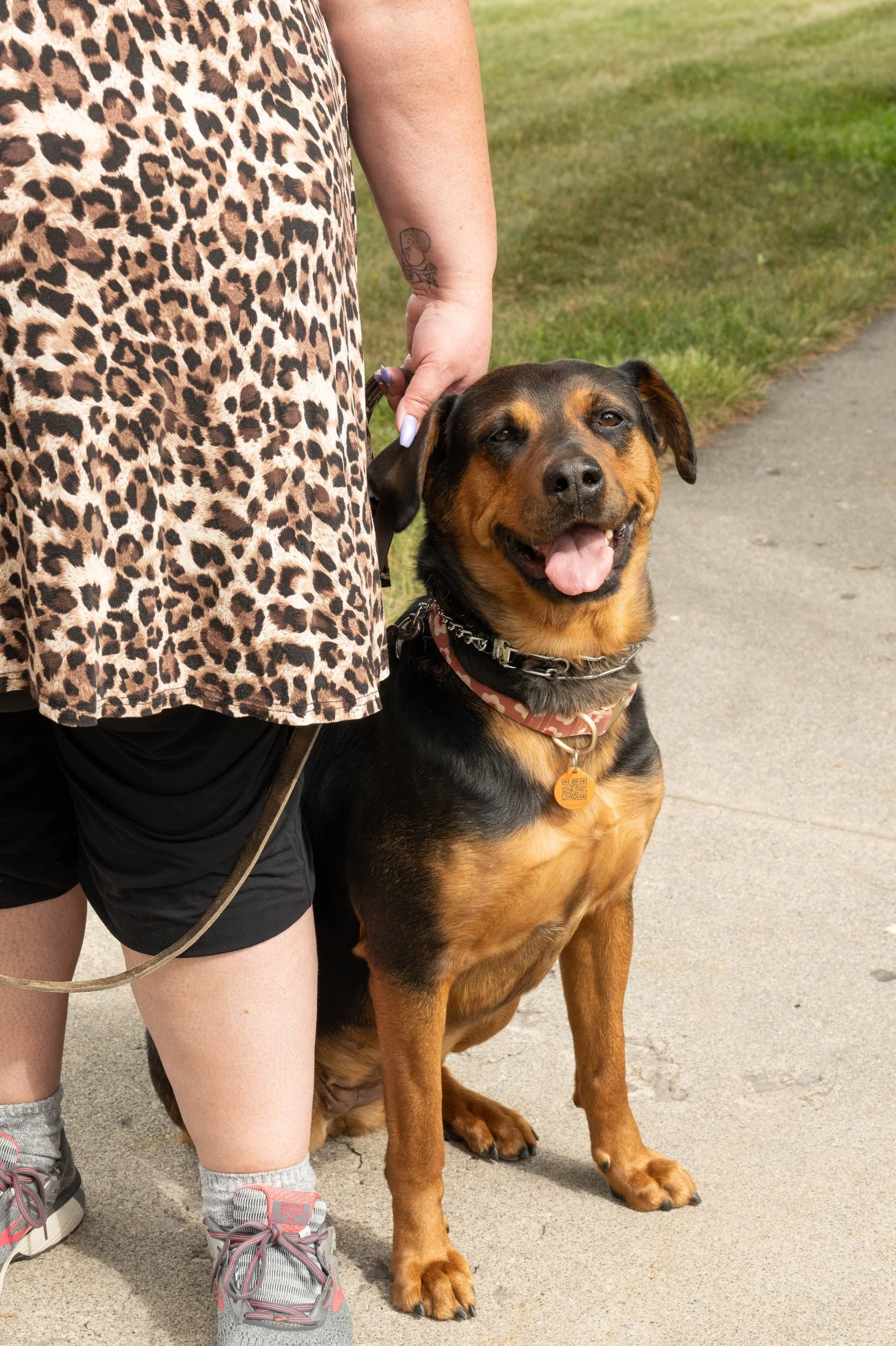
Stop Walking Beside Your Dog—Start Walking With Them
Have you ever taken your dog for a walk and felt like you were living in two completely different worlds?
You’re trying to walk down the sidewalk while your dog is pulling toward every smell, watching everything around them, stopping whenever they want, and completely forgetting you’re on the other end of the leash.
You’re walking together, but you aren’t necessarily connected.
A walk shouldn’t just be about getting your dog from one place to another or wearing them out. It’s one of the best opportunities you have to practice communication, boundaries, impulse control, and trust.
The goal isn’t to make your dog ignore the world around them. Dogs should sniff. Dogs should explore. Dogs should enjoy their walk.
The goal is to teach your dog that you are part of their world, too.
Start With Connection
Before worrying about perfect heelwork or having your dog glued to your side, start by teaching your dog to notice you.
Take a few steps and see if your dog naturally checks in with you. When they look at you, come back toward you, or choose to follow your movement, acknowledge it.
You can use praise, a treat, or whatever reward motivates your dog.
You’re teaching them: “Paying attention to my person is a good thing.”
You don’t need to constantly call your dog’s name. In fact, one of the most valuable things you can teach is for your dog to choose to check in with you without being asked.
Practice Changing Direction
One simple exercise is changing direction.
Instead of allowing your dog to decide where the walk goes, occasionally change your direction. Turn left. Turn right. Slow down. Stop.
Your dog should learn to notice what you are doing and follow your movement.
If your dog doesn’t notice at first, don’t get frustrated. Give them a chance to figure it out.
You’re creating a habit of paying attention to you.
Eventually, your dog begins to think: “I wonder what my person is doing.”
That little thought is the beginning of connection.
Let Your Dog Sniff—But Make It Part of the Conversation
A connected walk does not mean your dog has to heel for the entire walk.
Sniffing is important. Exploring is important. Your dog experiences the world through their nose, and allowing appropriate opportunities to sniff can make walks more enjoyable and enriching.
But there is a difference between your dog deciding everything that happens on the walk and you intentionally giving them freedom.
Try creating a rhythm: Walk together → check in → explore/sniff → come back together → continue walking.
You are teaching your dog that freedom comes with communication.
They can enjoy the environment without disconnecting from you.
Practice Around Distractions
This is where your relationship really starts to grow.
When you see another dog, person, squirrel, bicycle, or other exciting distraction, don’t wait until your dog is already completely overwhelmed.
Create some distance and work on getting their attention before they reach that point.
Reward your dog for noticing the distraction and then coming back to you.
You’re teaching them: “I can see exciting things without losing my mind over them.”
And even more importantly: “When I don’t know what to do, I can look to my person.”
That is a valuable skill far beyond the walk.
Remember: You’re Building a Relationship
It’s easy to think of dog training as a list of commands.
Sit.
Stay.
Come.
Heel.
But training is really about communication.
Every interaction you have with your dog teaches them something about your relationship.
If your dog learns that you consistently communicate clearly, follow through, provide structure, and still allow them to be a dog, they begin to understand what they can expect from you.
And when your dog understands what they can expect from you, trust grows.
That’s why a connected walk can have an impact far beyond your front door.
The dog who learns to check in with you on a walk is practicing checking in with you at home.
The dog who learns to follow your direction around distractions is practicing listening when life gets exciting.
The dog who learns that boundaries are consistent on the sidewalk begins to understand that boundaries are consistent inside the house, too.
Don’t Aim for a Perfect Walk
Your walk doesn’t need to look perfect.
Your dog doesn’t need to be in a perfect heel the entire time.
There will be distractions. There will be moments when your dog gets excited. There will be days when things don’t go as planned.
That’s okay.
Instead of asking, “Is my dog walking perfectly?”
Ask: “Are we communicating?”
Is your dog checking in with you?
Can you change direction and have them follow?
Can you get their attention around distractions?
Can they enjoy sniffing and exploring and then reconnect with you?
If the answer is becoming “yes,” you’re making progress.
Because the goal isn’t simply to have a dog who walks nicely on a leash.
The goal is to have a dog who understands that you are their partner as they move through the world.
You’re not walking two separate paths while holding the same leash.
You’re learning to walk together. 🐾
Want to practice a connecting walk under the guidance of a dog trainer? Join us for Pack Walk!
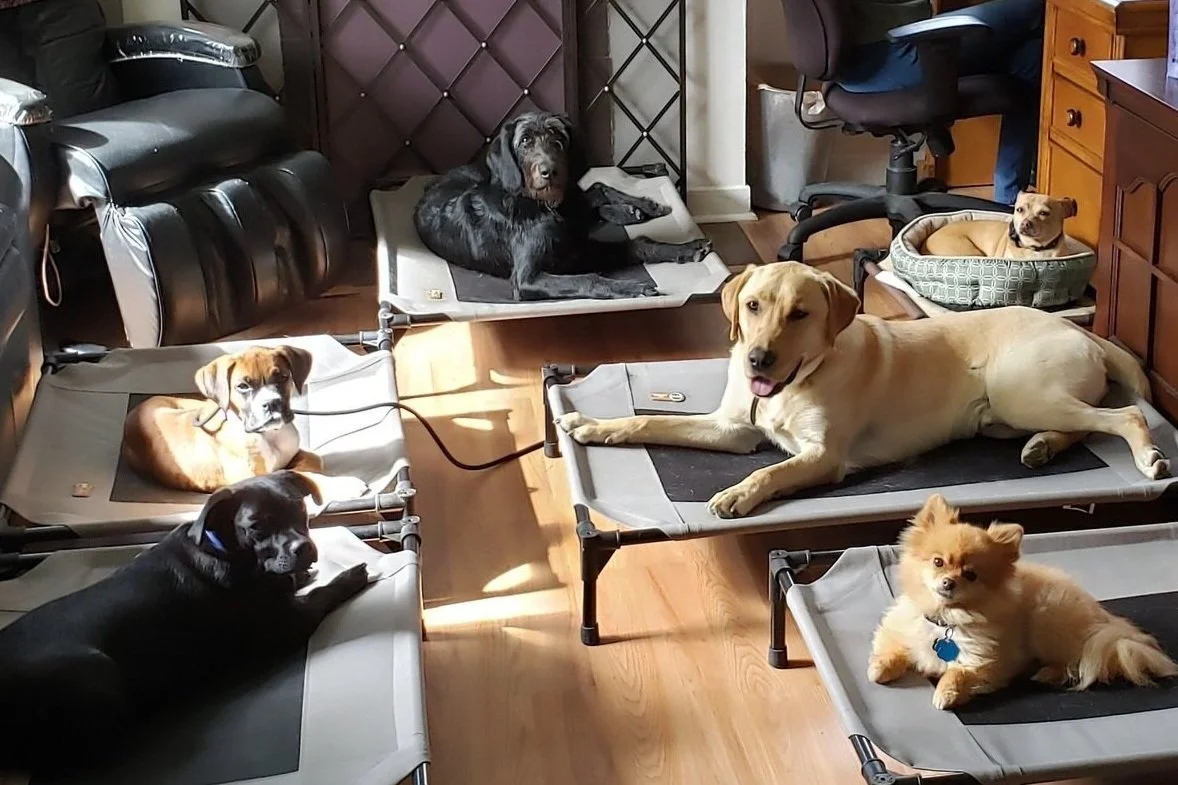
TRAINING VIDEO: How To Teach Your Dog Self Control
Your dog is capable of more than you give them credit for. Raise the bar and hold them accountable to be better, well-mannered, contributing members of society. If your dog's impulse control has slackened, here's some homework to follow up on.
In this one video you'll see how we teach these dogs:
self-control,
patience,
good table manners,
and to wait their turn.
If your dog's impulse control has slackened, here's some homework:
Step 1: Get some treats or your dog's daily food.
Step 2: Wait for your dog to show proper etiquette: quiet, calm, soft but direct eye-contact.
Step 3: Offer the food, but be ready to refuse it if your dog breaks etiquette, i.e.: barks or whines, jumps up or grabs at the food in your hand, gets distracted or demanding.
Step 4: If they maintain good manners, let them eat the treat in peace and skip to Step 6.
Step 5: If they break etiquette, take back the treat and say "eh eh" and start back at Step 1. Repeat as necessary until your dog shows good manners.
Step 6: Apply these steps to every aspect of your life with your dog, i.e.: getting the leash on to go for a walk, heading out the door, making dinner, greeting you when you get home from work or school, walking around the block.
Your dog is capable of more than what you give them credit for. Raise the bar and hold them accountable to be better, well-mannered, contributing members of society.
If you have more questions or curiosities about training, please, book a free consultation!
Comment below with what you've done to help your dog with self control or share with a friend who needs help.

Your dog is what they eat
You have probably heard the phrase (and know it to be true) that “you are what you eat.” The same goes for our dogs.
You have probably heard the phrase (and know it to be true) that “you are what you eat.” The same goes for our dogs. Think of your shopping list. How many items on that list are whole, fresh foods full of essential vitamins and nutrients, complete nutrition as nature intended? And how many items are pre-cooked and processed, full of carbohydrates, sugar, dyes, and other preservatives to extend a long shelf life for convenience and prevent spoiling? Which foods on your list are essential for a long and healthy life? And which foods are luxury items that bring your joy and comfort but very little nutritional benefit?
Now think of your dog’s food. It probably comes in a large paper or plastic bag and looks like cardboard and tastes like it too. Just like your grocery items that are highly processed, full of preservatives, and have a shelf life of 1-5 years, every commercial dog food (especially kibble and canned foods) fall under the same nutritionally deficient/luxury item.
If you ate what your dog eats on a daily, weekly, yearly, decade-long basis, how healthy would you be, and how long would you live? Canine cancer is on the rise. It is now projected that one in every two dogs will contract and possibly die from cancer. One of the highest contributors to cancer is nutrition or lack thereof. For optimal health and longevity, we highly recommend feeding a balanced, raw diet of fresh meat, fat, fruits, and vegetables. The best place to start is with Volhard Dog Nutrition.
Want more help and tips about dog nutrition/dog training?
The Traffic Light Principle
As you pull up to the traffic light, it switches from green to yellow.
What do you do?
Keep going and hope you make it through the intersection before it turns red, taking a chance that you won’t hit someone or someone else won’t hit you?
Or do you stop and wait for the light to turn back to green?
As you pull up to the traffic light, it switches from green to yellow.
What do you do?
Keep going and hope you make it through the intersection before it turns red, taking a chance that you won’t hit someone or someone else won’t hit you?
Or do you stop and wait for the light to turn back to green?
As long as the light is green, you know you can keep going with little to no consequences other than getting to where you want to go within the timeframe you planned. But when the light changes from green to yellow, now you must make a choice. If you stop, you might be late. If you speed through, you might get pulled over if you’re caught or you might cause a fatal accident. It is in that moment of choice that true teaching happens.
Training your dog is like a traffic light
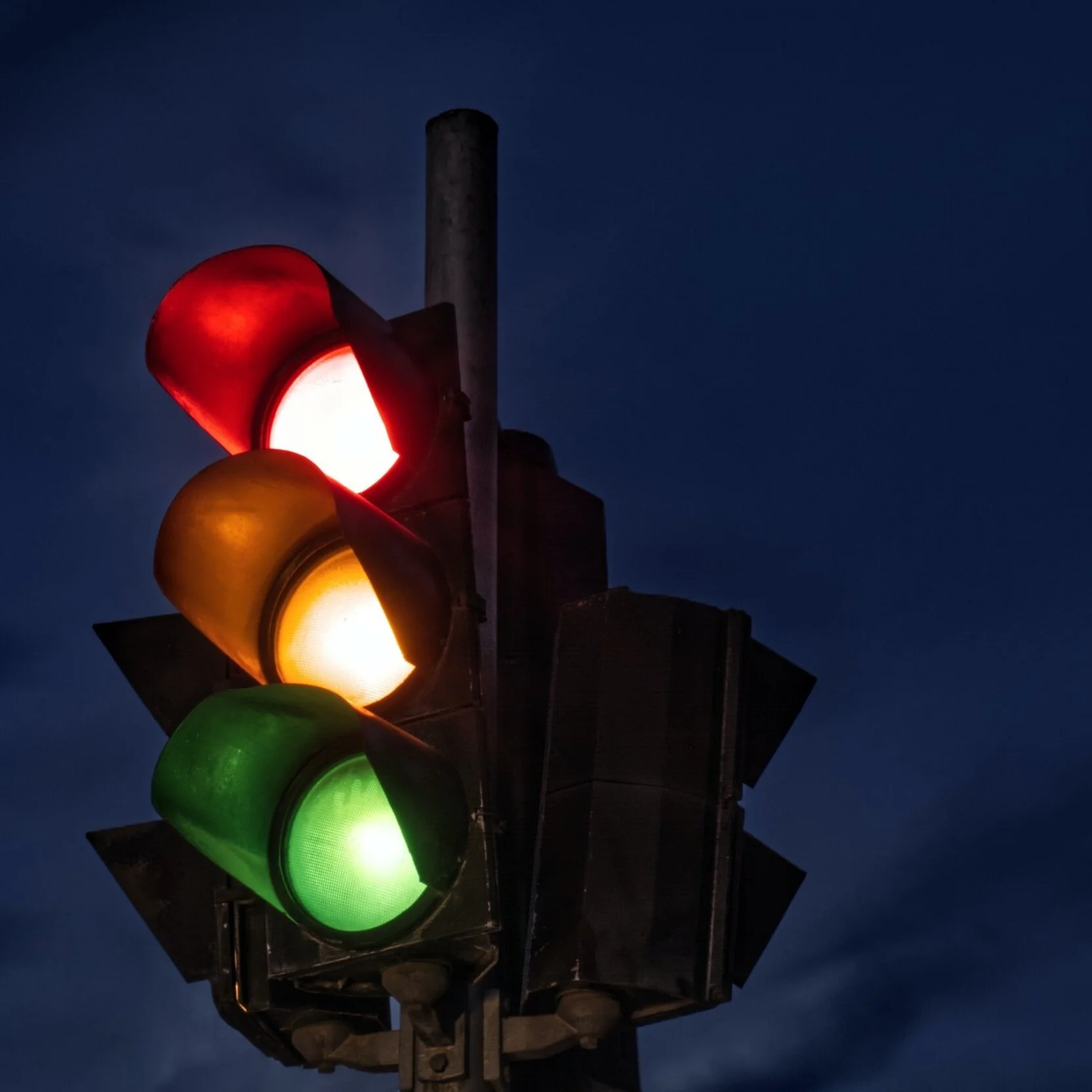
Green light means “you’re doing great, keep doing what you’re doing.” This is the positive side of dog training, the 90% when we reward our dogs for good behavior, usually in the form of treats, toys, affection, and “good boy”.
Yellow light means “caution, you might want to stop and think about what you are doing.” This is the negative side of dog training, the 9% when we teach our dogs to think before they act and give them constructive, informative, and corrective feedback to change their behavior before they do something they or we will regret.
Red light means “STOP NOW or you will face the consequences.” This is the non-negotiable side of dog training, the 1% when we must stop bad behavior that will harm our dogs or others.
When your dog pulls up to the traffic light and it switches from green to yellow or yellow to red, keep this mantra in mind: “Be as fair as you can be, but as firm as you need to be.”

Will my dog listen without the e-collar?
Hey Sara, do you know if there’s a way to have a dog not be e-collar savvy? My dogs do behave better when they know their e-collars are on, but is there ever a time when they don’t need it anymore or is there a way to get them to listen without it?
QUESTION
Hi Sara! I hope you’re having a beautiful day today. I have a question that I’d like to hear your perspective.
Do you know if there’s a way to have a dog not be e-collar savvy? My dogs do behave better when they know their e-collars are on, but is there ever a time when they don’t need it anymore or is there a way to get them to listen without it?
ANSWER
Hey […]! Let me see if I understand your question.
Can a dog eventually be reliable and trustworthy without the e-collar on? Or, can you ever prevent dogs from becoming e-collar savvy?
The answer to the first question is yes. Humans have been teaching dogs for eons without e-collars. However, for the best results you should start early during the imprinting stage, and it typically takes 10 times as long and even then there is always a slight 1% chance your dog will decide it's worth it to give you the middle finger.
The answer to the second question is “maybe”, but most likely “no”. Take our own behavior for example. Why do we drive 5-20 mph over the speed limit when we all know it's against the law, but drive 5-10 mph under the speed limit when there's a highway patrolman in sight?
Just let that sink in. And I'll leave the decision to use or keep using the ecollar up to you.
Free Feeding or Scheduled Feeding?
These are a few reasons why scheduled feeding is far better than free feeding that I have personally seen with my dog owners and my own dogs…
This is a hot and sometimes divisive topic that typically comes up during discussions with my dog owners at the first or second lesson.
Some are adamant that their dog be allowed to eat whenever and whatever he wants just like their children or grandchildren. If that's your cup of tea, then great! Continue doing what you're doing. But these people generally contact me because their dog has a bad habit or behavior that annoys or severely inhibits their home and lifestyle.
So, I help them take back control over what they can control as quickly as possible. Managing meal times is the first and easiest thing you can do to make immediate changes in your home without too much effort.
These are a few reasons why scheduled feeding is far better than free feeding that I have personally seen with my dog owners and my own dogs:
it makes potty training easier, if you can regulate when it goes in, you regulate when it comes out and how often!
dogs digestive tracks are not meant to have food constantly going through them. They are predators and scavengers, only eating when given the opportunity. Therefore their systems are built for scarcity not abundance. They have a predator's (think gorging) gut, not a prey's (think grazers) gut.
it's easier and quicker to tell if your dog has a medical or dental issue. If my dogs don't immediately eat all of their food, I know something is wrong.
sanitation, while most dogs don't have adverse reactions to dirty dishes and food that's been left out for most of the day, there is always a risk of spreading illness and attracting pests. Feeding on a schedule automatically gives you the opportunity to remove the dog dishes and clean them between feedings.
eliminates picky eaters. Why should the dog eat his food right away when he can nibble at it anytime he wants or beg for much better and more delicious food from the dining room table or countertop?
"dogs won't bite the hands that feed them." Whether you believe this old adage or not, there is a great tasting benefit to scheduling feedings. If your dog recognizes you as the source of their food and water, they are more likely to listen to you. If food is always available, what role do you play on your dog's life? Nothing more than entertainment and the mode of going out for a walk.
A note about puppies, tiny teacup dogs, and dogs with medical issues, use your best judgement. If your dog has a serious illness or diabetes or difficult time keeping weight on, then obviously feed your dog according to your vet's recommendations. These ideas have helped most of my clients solve every day, nagging behavioral issues and conquered the potty training dilemma.
My hope with this post is that you will gain some perspective and make a better informed decision whether you should continue free feeding or switch to scheduled feedings.
The Good Neighbor’s Guide to Petiquette
By following the etiquette tips below (otherwise known as “petiquette”), you and your pup will live in peace and harmony with your neighbors. Best of all, you’ll have a happier, more secure dog because a well-behaved dog is a happy dog!
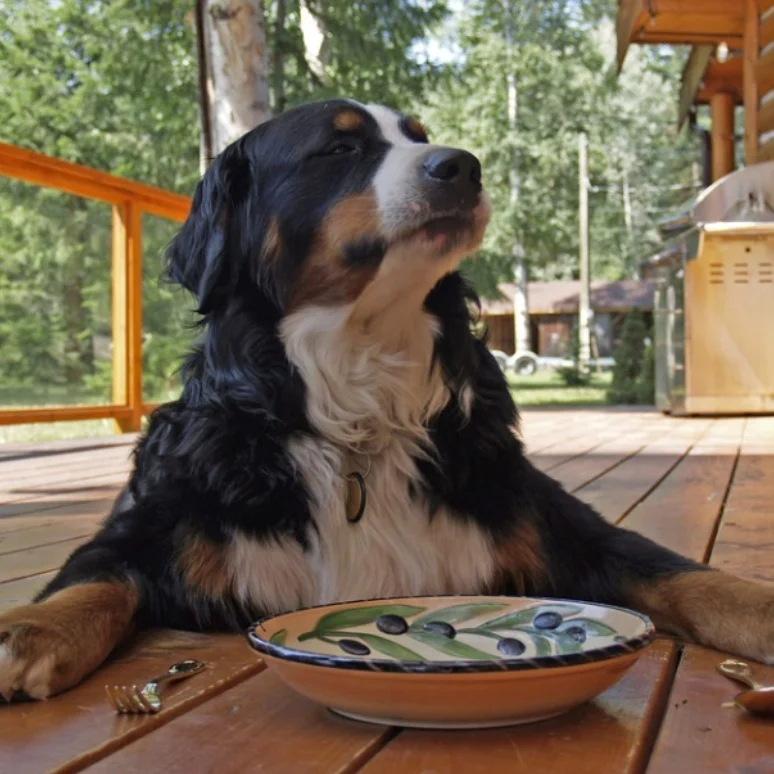
Photo via Pixabay
Article Written by Bakers Acres Contributor: Nick Burton
How could anyone not adore your dog? He’s cute and super friendly and wouldn’t hurt a squirrel. The truth is not everyone is a dog person. Sometimes even dog people aren’t enamored with other people’s dogs, especially in their yards (but more about that later). By following the etiquette tips below (otherwise known as “petiquette”), you and your pup will live in peace and harmony with your neighbors. Best of all, you’ll have a happier, more secure dog because a well-behaved dog is a happy dog!
In Public
Unless you’re in a dog park, in your own fenced-in yard, or live on 500 acres, always leash your dog when outside.
Training is not optional. The well-trained city dog needs to respond to a minimum of five basic commands: “sit,” “stay,” “heel,” “leave it,” and “come.”
When you get a new dog or move into a new neighborhood, you’ll want to introduce your dog to neighbors after you’ve settled in. Pick a time when your dog is tuckered out and fully fed, and be sure to communicate any special info (e.g., your pup isn’t very good with children). This is also a good time to broach the subject of “lawn accidents.” Assure them that if your pup should ever poop on their lawn that you will pick it up. Some neighbors will not want your dog to even step on their front lawn, let alone relieve himself on it. This is the perfect time to gather that kind of info.
No article about petiquette is complete without a section on bio breaks. The Humane Society says, “Scoop your poop,” but being a good neighbor is about more than that. Unless your neighbors have given you free rein in their front yard, you should not let your dog use it. For one thing, your dog’s urine can cause grass damage. Also, once a dog goes on a yard, others smell it and start using that same spot, too. All dogs use urine marking to communicate different messages. Part of being a conscientious neighbor is not letting your dog “communicate” on your neighbor’s mailbox, lawn, or gnome ornament.
If you have a yard of your own, encourage him to relieve himself there before heading out on a walk. While walking, train your dog to use the strip between the street and the sidewalk. Carry a bottle of water with you (along with extra bags), so when accidents happen, you can flood the area with water.
It is your responsibility to make sure that your dog does not jump on people or lunge at other dogs. Of course, if you find that your dog exhibits aggressive behavior when meeting new people or their pets, you’ll want to work with a professional before introducing him to neighbors!
While at Home
Whoever said that good fences make good neighbors must have had a dog. When it comes to responsible dog ownership, nothing is more critical than having a good fence—one that keeps both diggers and jumpers out of your neighbor’s yard. Most importantly, fences keep your dog safe. According to HomeAdvisor, it costs around $1,640 to $3,964 to install a fence, and considering the peace of mind it brings, it’s the best investment you can make for you and your dog.
When a neighbor complains about anything from how much your dog barks to how smelly your backyard is, listen, apologize when applicable, and take action. Most of all, be considerate.
When it comes to being a conscientious dog-owning neighbor, you’re always better off using the Platinum Rule vs. the Golden Rule. That means doing to others what they would like vs. what you yourself would like. By following the tips above, you will set up positive relationships built on consideration and respect, and you and your dog should enjoy many beautiful days in the neighborhood.
Kids & Dogs | Part 1: Isolation
No matter how well-behaved the dog or how responsible the child, DO NOT LEAVE YOUR DOG AND CHILD ALONE IN THE SAME ROOM, even for a split second!
Article Written by Bakers Acres Founder: Sara Baker, owner of Bakers Acres K9 Academy
Last week we laid down the ground rules. This week we’re going to lay it out for you, step by step.
Step 1: ISOLATION
Give Them Time
When you bring baby home for the first time, resist the urge to allow your dog to “greet” your baby. Your baby is none of your dog’s business. Your dog is none of your baby’s business. For the first 6 months your dog and baby will be isolated from each other.
Why?
Babies make high-pitched squeals, screams, coos, and other “prey-animal” noises that might confuse, frustrate, and scare your dog or even turn on your dog’s natural, predatory urges.
Dogs make loud, high-pitched whines, barks, scratches, and other natural dog sounds that might wake up, confuse, or scare your baby. As a wife, mother of two, dog-owner, and entrepreneur, I value my sleep. When Mckenzie was born, my dogs were sent to Grandma’s house for a few days so I could recover and try to get some sleep after a 12 hour labor!
Establish Home Base
Baby’s home base is the entire nursery or your master bedroom. Kick your dog out for the time being. He will thank you in the long run.
Dog’s home base is his crate in a dog room, laundry room, closet or other quiet place away from the noise and bustle of baby.
When baby is in the main living area, your dog should be crated or on a dog bed and have a solid “stay” command. No sneaking off allowed!
While out on a walk with your dog, start with two adults, one in charge of the baby riding in a car seat, stroller, sling or similar baby carrier, the other in charge of the dog on a 4’-6’ leash.
To Recap
When unsupervised, your child should be confined to the nursery in a crib or pack n’ play. Your dog should be in a quiet room with a door inside his crate.
DO NOT LEAVE YOUR DOG AND CHILD ALONE IN THE SAME ROOM, even for a split second!
When supervised, your baby should be in a baby carrier. Your dog should be on a dog bed tied back with a leash or in his crate.
DO NOT LET YOUR BABY TOUCH YOUR DOG, period.
DO NOT LET YOUR DOG TOUCH OUR BABY, period.
WAIT until your child is old enough to learn and understand that dogs are sentient beings with their own personal space.
WAIT until your dog has adequate training to be calm and comfortable in his crate and on his bed without getting in your baby’s business.
Stay tuned for more steps to raising socially responsible kids and dogs. In the meantime, here is your homework: watch the video below and visit stopthe77.com to do at least 2 of the activities together as a family.

Kids & Dogs | Non-Negotiable Rules
There are a lot of GOOD dogs out there that had a BAD day that ended up killed because we were so certain "my dog would never bite my child."
Why take the risk?
Article Written by Bakers Acres Founder: Sara Baker, owner of Bakers Acres K9 Academy & Contributing Author: Katherine McCarter, owner/head trainer at Rock Star Dogs
Dog Training Baby tip...When kids and dogs are in the same space, SUPERVISE, but also be aware of what could happen. Don't put all the responsibility to be good on the dog, especially when your baby is in their space, in their face, pulling their hair or ears, jumping on their back, etc. Teach your kids to be respectful of the dog and teach your dog to give your kids space.
This might sound harsh, but we actually never allow any interaction whatsoever until the "baby" (actually a toddler) is old enough to follow instructions and dog is proficient at obedience and manners. Yep, that means for the child there is no petting, patting, sitting on, giving treats, pulling on ears or tails, stealing toys, etc. For the dog that means there is no licking, babysitting, eating from baby's hand or high chair, stealing toys, etc. NO INTERACTION OR CONTACT. PERIOD!
Why so dramatic? Well, here's a few stats to look over...Stop The 77
If you are expecting, consult with a canine professional asap, even if your dog is already super awesome around kids. Be prepared and take the steps necessary to protect your child and your dog. There are a lot of GOOD dogs out there that had a BAD day that ended up killed because we were so certain "my dog would never bite my child."
Why take the risk?
Below is our MUST FOLLOW rules for every household in which dogs and kids live together or visit regularly.
NON-NEGOTIABLE RULES
SEPARATION: ALWAYS have separation in place. In the beginning, the baby is separated (in the nursery, in the crib, in a sling/baby carrier, in the highchair), then as the child becomes more mobile (crawling, toddling) the dog will be separated (in a crate/kennel, on a dog bed, in the laundry room). Do not leave the child in same room as the dog, even for a few seconds.
SAFE PLACE: Establish a safe place for the dog to hang out and allow the dog to retreat on their own if they ever feel cornered, anxious, overwhelmed, and especially when they are enjoying a chew toy or eating their food. This can be in their own crate, in a room away from the child so no little fingers can find their way into the crate.
PERSONAL SPACE: absolutely never allow the dog near the baby when changing diapers, while the child is eating in the highchair and especially when the child is wandering around with food in their hands.
SUPERVISE: When the child is old enough to begin interacting (2-3 years of age), supervise at all times and have a leash on the dog.
Share this post with a friend who is expecting or might already have kid/dog issues and needs help asap!