

THE FAMILY DOG HELPLINE
Bakers Acres Dog Blog
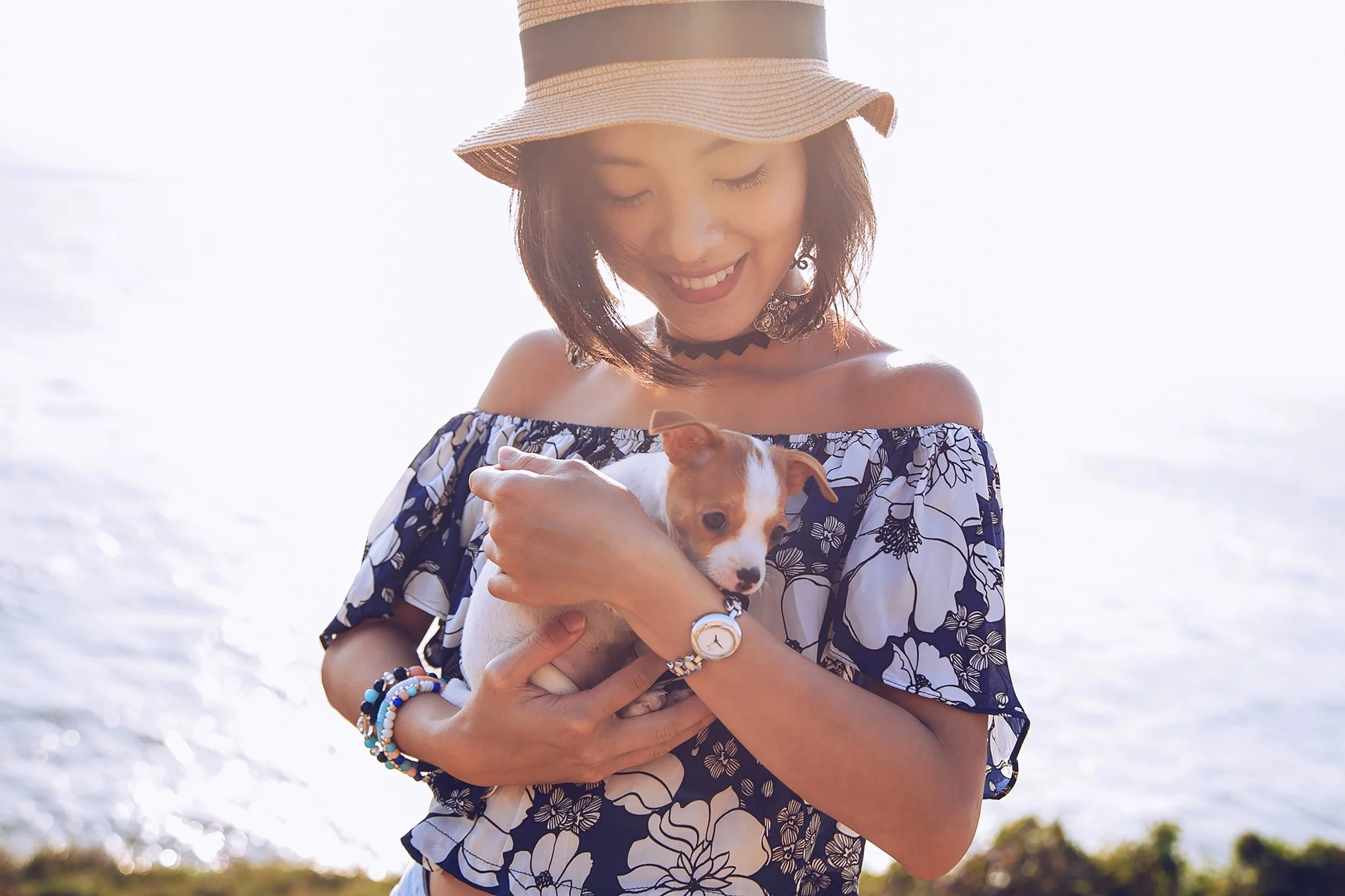
A Beginner's Guide to Being A Great Pet Parent
Anyone can be the perfect pet parent with the right plan.
Photo Credit: Unsplash
Article Written Bakers Acres Contributor: by Jessica Brody, author of Our Best Friends
Looking for your first pet? It’s a big decision, with big responsibilities and even bigger rewards. But anyone can be the perfect pet parent with the right plan. Want to know how to keep your new pet happy and healthy? Here’s some advice to help you adjust to life as a pet parent.
Finding the Right Pet for You
There are so many homeless animals in need, so you’re sure to find a pet that suits your lifestyle and preferences at your local shelter or rescue. Take your living arrangements, activity levels, and pet preferences in mind when searching for your new soulmate. Maybe you’d like a cat to keep you cozy at night or a dog to help you feel safe. Make a list of what you’re looking for and then start with a search that will show you adoptable animals in your area.
Prepping Your Home for Pets
If you’re a first-time pet parent, you’ll need to make some adjustments to get your home ready for your new pet. If you plan to let your pet play in the yard, make sure it’s secured to prevent escapes. Look for problems spots in existing fences and make sure it isn’t easy for a dog to dig out of the yard. It’s best to keep cats inside, but add a couple of cat trees to keep them active and happy. It’s also a good idea to check for houseplants that may be poisonous to your new pet, and be sure to place cleaners and food out of reach of curious animals.
Ensuring Your Pet’s Health and Safety
Find a vet and schedule a wellness exam for your new pet. Make sure your furkid is up to date on all shots, and pick up any preventative medications you may need. It’s also a good idea to put together an emergency plan for your pet. Make an animal first-aid kit and keep it with you wherever your pet goes. Be sure their tags are updated, and keep microchip information current. Keep current photos of your pet on file, and always keep contact information available for the closest emergency vet.
Settling Your New Pet Into Their New Life
Animals don’t always do well with change. Your new friend will need time to adjust to you and your new home. Shelter pets may sleep a lot when you bring them home, but they’ll perk up quickly. This is a good time to tackle any problem behavior, such as chewing or accidents in the house. Stay patient, employ proven training methods, and consult with a trainer if you need to address behavioral issues with your new pet.
Being a pet parent will bring joy to your life, but it will also bring challenges. Make sure you are ready for your new role and welcome your new best friend into your life. Enjoy your time and all the unconditional love animals have to offer.

What to do when your puppy gets scared...
When your puppy engages in the run-and-hide-behind-mom maneuver, ask them, “what is it” and encourage them to cautiously approach.
Article Written by Bakers Acres Founder: Sara Baker, owner of Bakers Acres K9 Academy
OVERCOMING FEAR
FIRST:
Allow your puppy to explore, safely of course, and encourage them to approach scary, but safe, objects.
SECOND:
When your puppy tries to hide, run away, or barks at something new and foreign, check that it’s safe to approach, and ask them, “what is it?” Encourage them to cautiously approach.
THIRD:
Peak their curiosity. Approach with them and touch or slowly move the object of their fear.
For example, one of our puppies-in-training, Tommy, saw my toddler’s toy lawnmower one day sitting in the middle of the yard. He did the typical “Bark! Bark!”, run-and-hide-behind-mom maneuver. So we took the opportunity to show him how to overcome his fears. “What is it?” We asked. He barked, but stayed back. We slowly walked forward and said “What is it” again. He edged forward and sniffed. Once we touched it, he quickly backed away, and we started back at the beginning until eventually he was able to touch it himself and see that it was just a toy, an inanimate object. Then we slowly moved it to a new spot in the yard. He went back to hiding and barking, but he overcame his fear much more quickly this time and was fine with the toy from then on.
Below is a video of Scout, a 3 month old Scottish Terrier. While here for puppy daycare, he noticed a very scary object in our daughter's room. Watch how we handled this situation and apply what you learned.
The moral of the story? Be calm and patient, but also encourage their curiosity and show them it’s not something to fear.

6 Steps to Better Communication With Your Dog
When communicating with someone who speaks a different language, it’s helpful to learn their language to help them understand you!
- Article Written by Bakers Acres Founder: Sara Baker, owner of Bakers Acres K9 Academy
Why our dogs don’t listen
“Buddy, come!” “Come...” “Come! Come here!” “Buddy!!! COME!!!”
We have all found ourselves in this situation or one similar to it. It is so frustrating and sometimes terrifying! And oftentimes gets our dogs into a lot of trouble or danger if they don’t listen.
But why does this happen so often?
The problem lies in the fact that our dogs are dogs...not humans. Let me say that again. Dogs aren’t human!!! Dogs are a different species and as such they speak a different language. When communicating with someone who speaks a different language, it’s helpful to learn their language to help them understand you!
What can we do to help our dogs understand us?
As with all relationships, communication is the key! Learning HOW an individual communicates is even more crucial.
Dogs rarely communicate verbally, or vocally. For instance, they only make noise when they’re demanding attention, hyper, anxious, afraid, or aggressive. Other than that, they’re quiet. Or they should be. A happy, healthy dog, is a quiet dog. They speak more with their bodies than their voices. So, if you want your dog to understand “human” you need to first speak “dog”.
STEP 1: Be calm
Take a deep breath. Relax. Are you ready? If you’re frustrated, angry, upset, or scared, pause a second to gather your wits. In the event of an emergency, just don’t say anything. Loud, scared, emotional voices often create or add to the problem. It’s better to remain silent.
STEP 2: Get your dog’s attention
Say their name in a friendly, yet assertive voice. Think of your Grandma and the respect she deserves. Be Grandma.
STEP 3: Speak clearly
Use one word for a specific command and only use that word for that command or context. For example, sometimes we slip up and say “down” when we really want our dog to get “down” off the couch. Differentiate the two commands by choosing a word that means “to lay down” (we like the word “DOWN”) and a correction that means “to get off” (we use the word "OFF").
STEP 4: Give one command and wait
Allow your dog time to hear, understand, and comply with the command. Silence and patience are golden. Repeating the command or saying anything at all can actually cause confusion and your dog will probably just walk away or join in the “barking!” Avoid repeating the command unless it will add clarity.
STEP 5: Follow through until your dog complies
If they turn away to avoid doing what you’ve asked, or something else grabs their attention, say “nope” and bring them back to start over at Step 1.
STEP 6: Throw a party!!!!
When your dog understand and listens, throw a party! Give them a treat! Sing their praises! Show them what a good dog they’ve been.
BONUS MATERIAL
We recommend commands with 1 word, 1 syllable, and a strong vowel sound.
SIT (instead of sit down),
DOWN (instead of lay or lay down),
COME (instead of here or come here),
PLACE (instead of bed or get on your place),
OFF (instead of down when commanding to get off of or down from something),
OUT (instead of drop it or release),
CRATE (instead of kennel or bed)
GET IN (load up in the car)
We love using marker words while actively training or interacting with our dogs.
"Good" means keep doing what you're doing.
"Yes" means good you completed that task, take a brief break before starting a new one.
"Break" means we're all done, go have some fun.
"Nope" means that's not what I wanted. Try again.
"No" means NO! Don't ever do that again.

Cloning Your Pet
While cloning your pet might sound like every pet owner's dream come true, it is not at all healthy for the dog...maybe even for the owner.
Image courtousy of akc.org
Article Written by Bakers Acres Founder: Sara Baker, owner of Bakers Acres K9 Academy
The pet world is all ablaze with the news that Barbara Streisand recently cloned her beloved Coton de tulear who passed away. (Read more about that here). While this might sound like every pet owner's dream come true, it is not at all healthy for the dog...maybe even for the owner because there might now be an unhealthy attachment to a dog that is similar in some respects, but vastly different in others.
Cloning will most likely lead to a smaller and more unhealthy gene pool. Plus there is no guarantee that this "new dog" will be the same as the "old dog." Yes, they might look the same, but temperaments and personalities can be completely different. While genetics does play a large part in how a puppy acts, you have to take nurturing and environment into account. A cloned puppy would probably be treated as a surrogate for the grieving pet parent. And thus would be subjected to very vulnerable and unstable human emotions at a very young age. Too young to understand human emotions and too immature to make wise decisions in a strange world.
We have seen it a LOT with owners who bypass the grieving period and get a new puppy right away. The owner unknowingly place a lot of emotional baggage on the new puppy and the new puppy, overwhelmed with the inability to understand human emotion, acts out in the only way it knows how, attack or flee. Another scenario is when new puppy owners who get a puppy thinking they can serve as their Service Dog or Emotional Support Dog without a temperament test or any previous training and they try to train it themselves when the puppy is not SD or ESA material. Hence the reason why so many puppies and dogs have major behavioral issues at such a young age.
When a beloved pet dies, do the healthy and humane thing...let your pet pass away in peace and let your heart heal from the loss. Then, when the time is right and you are ready, get a new dog that is the perfect temperament and energy level for you.

The Result of Remote Collar Training
Responsible, humane, remote collar training can save lives and bring fulfillment.
The Results of Responsible Remote Collar Training Are Boundless
Because of responsible remote collar training, we can take our dogs anywhere! One of their favorite places is the playground. If you have a high energy dog, get them trained on an ecollar so you can enjoy off leash excursions like this!
Starring: Bandit (Australian Shepherd) and Chico (Chiweenie)

Rules & Boundaries = Respect & Freedom
Dogs thrive on structure and boundaries. When rules are absent, dominant dogs naturally become the leader and take over while submissive dogs become anxious and overwhelmed with the responsibility of leadership...
Dogs thrive on structure and boundaries. When rules are absent, dominant dogs naturally become the leader and take over while submissive dogs become anxious and overwhelmed with the responsibility of leadership. Both scenarios create annoying and many times destructive behaviors. What many dog owners perceive as stubbornness or hyperactivity is really dominance and/or anxiety overblown! Establishing rules, boundaries and limitations in the home and in public will resolve or prevent these bad behaviors.
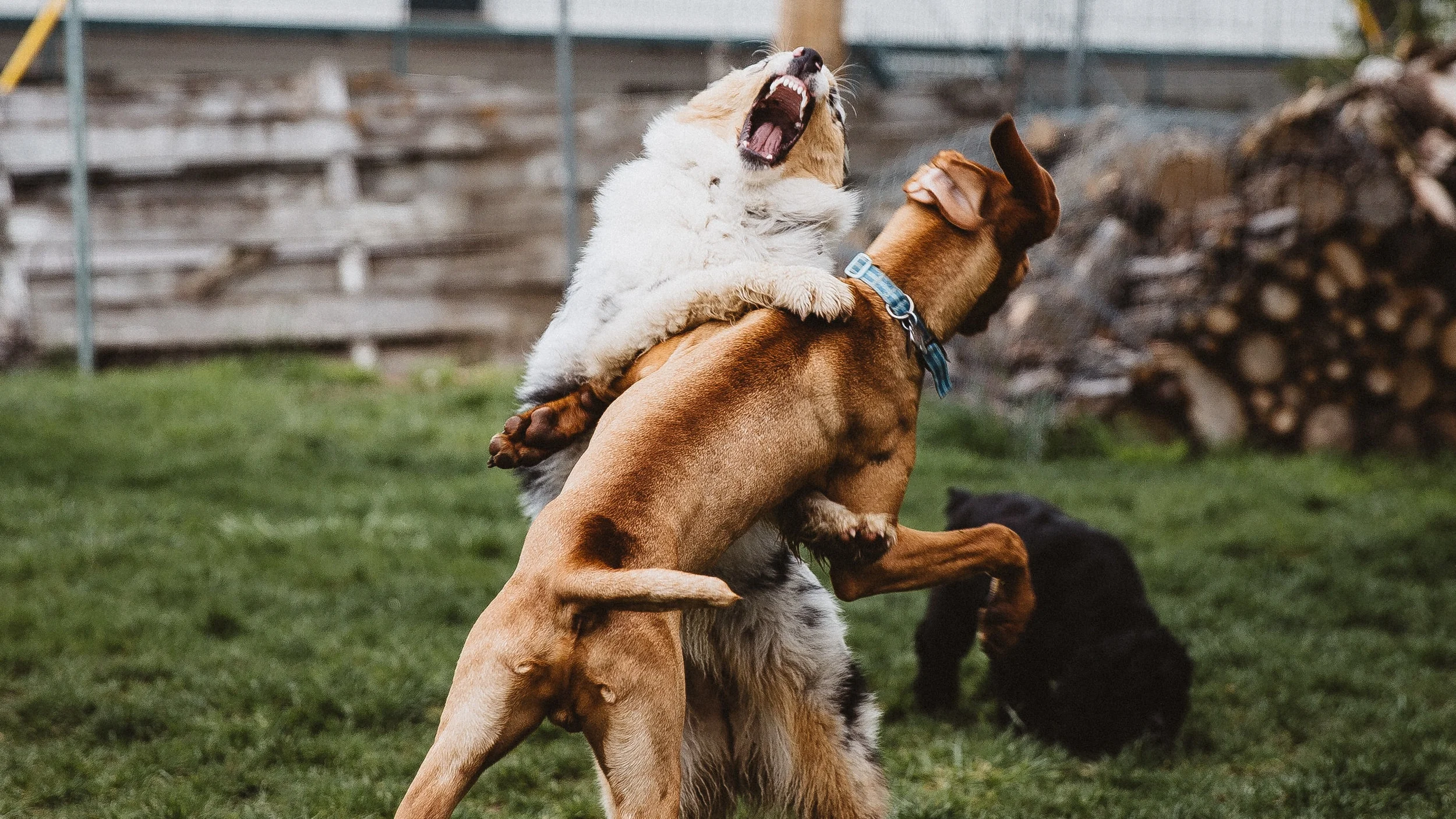
Puppy Playdates for Aggressive or Fearful Dogs
Don't take your aggressive or fearful dog to the dog park! Just don't!
I WANT TO MY DOG TO HAVE DOGGY FRIENDS, BUT...
If your dog shows aggression or fear around other dogs, STOP. Re-evaluate the goal. Are you wanting your dog to stop going after every dog? Or is your dog selective? If he's selective then he just needs a few, close, trusted friends that bring out the best in him. Set up playdates with some friends or neighbors with dogs of similar age, temperaments, and play styles. Avoid dog parks at all cost!!!
Your dog doesn't need to be friends with everyone. Now this doesn't mean that you allow your dog to be antisocial in a social setting. What it does mean is that you advocate for them and show them that they don't have to be in that type of a social setting in the first place.

4 Easy Halloween Safety Tips For Your Dog...(and every other holiday for that matter)
Halloween can be stressful for dogs...here's 4 Easy Tips to make it stress-free!
🎃 HAPPY HALLOWEEN 🎃
from the Bakers Acres Crew to yours!
Here are a few safety tips for tonight's festivities:
1. Keep 🍫candy and 🍭wrappers out of your dog's reach!
Many of our favorite holiday sweets are toxic to dogs, not to mention the potential of ingesting wrappers and other plastics. The simplest way to do this is to designate one area of your house as the "candy zone". This is also designated as the "dog-free zone". You can install baby gates, or just simply teach your dog to respect the threshold into the "dog-free zone".
2. Prepare for lots of doorbells and opened doors!
Our first recommendation is to crate your dog, especially if they are stressed when strangers visit or worse are prone to bolting out opened doors, no matter how slightly cracked. Second, teach your dog to mind his own business and stay on his bed (we call this "place"). You can practice right now before all the trick or treaters arrive. Get a "place" bed/mat/rug, leash your dog, guide him to the bed, "stay", and follow through each time he gets up. If this is too much work, then you can always tie your dog back to a sturdy piece of furniture or door.
3. While out trick or treating...
Keep your dogs on a leash and you might want to consider adding a reflective vest or glow stick to their outfit...just in case! If you have a Mini Educator remote collar, you can turn on the flashlight function!!! Oh snap!
4. Above all, be wise and follow your gut.
If you feel uncomfortable, your dog probably does. So just make the best judgment call to keep them safe and relaxed. Sometimes, it might just be easier to crate them or shut them in a room with the TV on.
Together, let's keep our pups safe and healthy this Halloween! Now get out and have some fun!
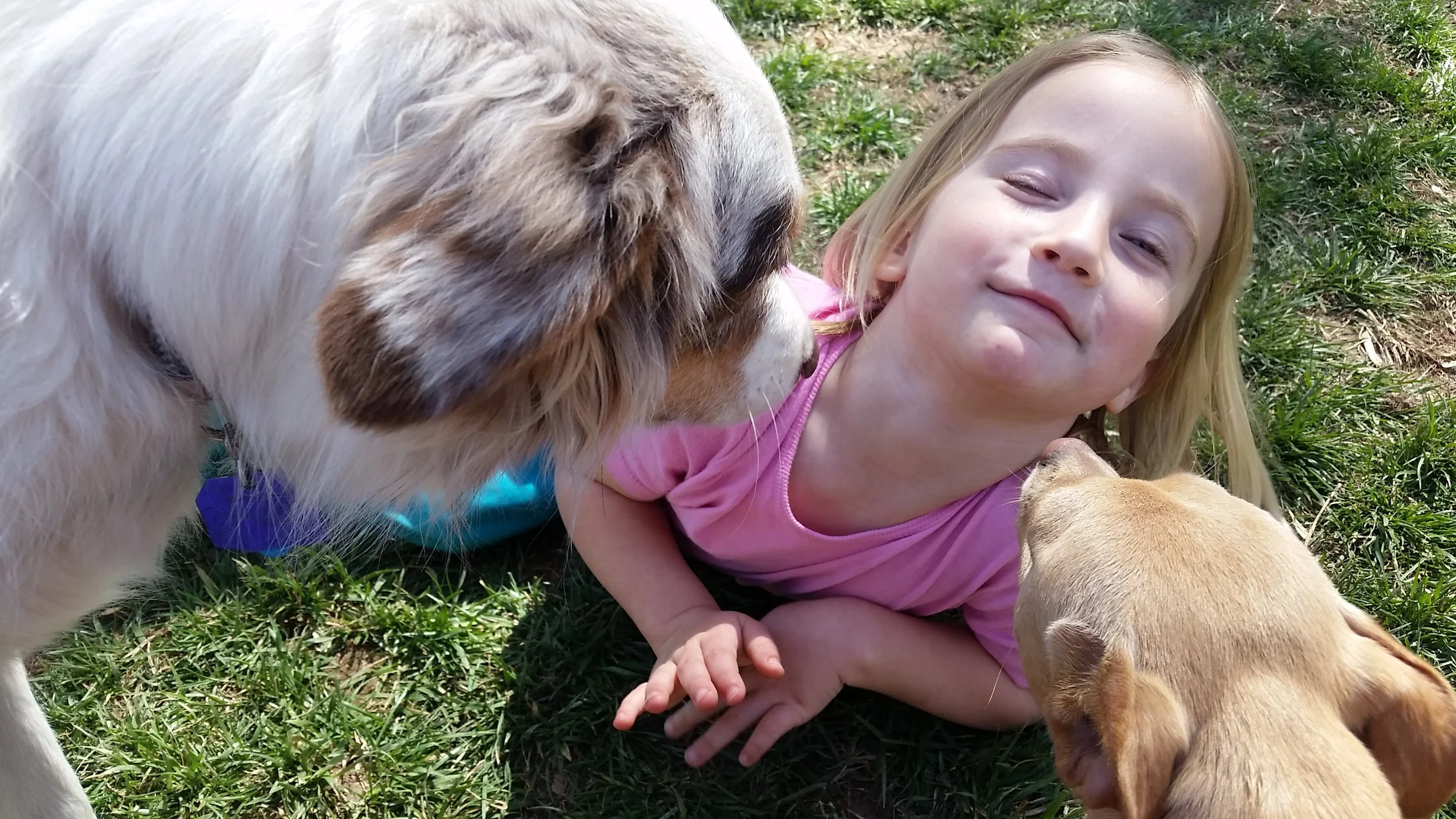
Dogs Are Dogs, Not Humans
They are not little fur babies, little humans, babysitters, nanny dogs, etc. They are in no way, shape, or form genetically related to homo sapiens.
“Most of the problem behaviors we see in today’s society will disappear if we treat our dogs like dogs.”
A recent vital video depicting a polar bear patting a dog on the head is being grossly misinterpreted.
"When we insist on seeing animals [like humans], we do them a disservice. We assign them the responsibility that comes with being human, including a code of morality that other animals [our dogs included] simply cannot follow." (Read more at, http://qz.com/841693/that-video-of-a-polar-bear-petting-a-dog-turns-out-to-show-us-a-predator-playing-with-its-prey/?utm_source=parBBC)
This is a problem that many of our domesticated pets, dogs especially, are continuously burdened with. We treat them like humans, expect them to behave like humans, hold them to the same accountability as humans. And then when they fail under such a heavy load, we're shocked. The dog ends up at the shelter, on death row, for our own stupidity and unwillingness to see them for who they truly are.
They are not little fur babies, little humans, babysitters, nanny dogs, etc. They are in no way, shape, or form genetically related to homo sapiens. In fact, they are a completely different species!!! Imagine that. They are Canis Familiaris, genetically 98% of they're wild forefathers, Canis Lupus, i.e. wolves...not humans...wolves.
Most of the behavior problems we see in today's society (separation anxiety, containment phobia, general anxiety, over excitement, aggression, reactivity, hyper arousal, household destruction, etc), behaviors we think can be fixed with medication or more love, will disappear if we treat our dogs like dogs.
Show your love, share your affection, when it is appropriate and earned. Then give discipline at the right time with just the right amount of information to teach your dog how to cope with domestic life.
Treat them like a DOG! And they will blossom.

What Is Balanced Training?
Balanced training - clearly communicate with a dog what is wanted and what is not wanted.
“Your dog is only as balanced as your household.”
Balanced Training
Balanced training uses a combination of positive reinforcement such as food, clickers, praise, and touch, and negative reinforcement such as spatial, verbal, and physical pressure to clearly communicate with a dog what is wanted and what is undesirable.
To be successful, all teams must work together to achieve the same goal. If owner, trainer and dog are on separate pages, then nothing is accomplished. Our goal is to teach you how to train your own dog to eliminate existing problems and prevent future bad behaviors from starting. We accomplish this through regular, structured exercise, rules and boundaries, and addressing nutritional and emotional needs, plus a wide variety of tools, praise and consequences. Each dog and owner are different and need a specific program tailored just for them.
We believe in correctly, safely, and humanely using any tool in the toolbox that the dog responds best to. Some of the tools we use are: tone of voice, body language, flat buckle collar, prong collar, verbal markers, food, dressage whip, "bonker", e-collar/remote training collar, slip lead, pet convincer, muzzle, dominant dog collar, and martingale collar.
If you have any issue with these tools, please feel free to ask why. We'd love to show you and educate you on how to properly and humanely use each of them and see the benefits. But if you feel these tools and methods aren't what you're looking for, then we can refer you to other trainers in the area that might be more suited to your style.