

THE FAMILY DOG HELPLINE
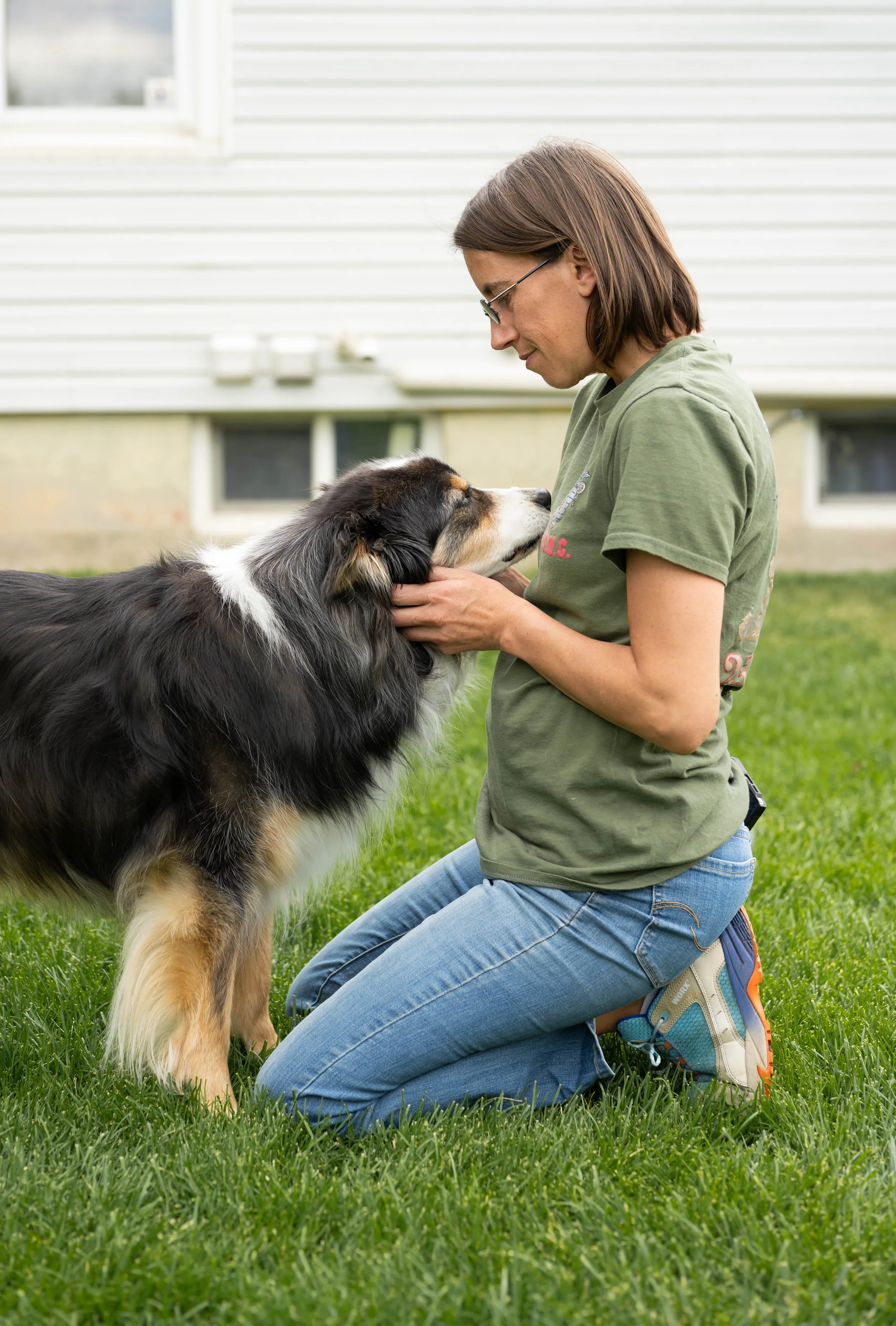
Patience: One of the Most Important Tools in Dog Training
Training isn’t just about teaching your dog. You are also learning how to communicate with your dog.
You have to be patient while your dog figures out what you are asking, but you also have to be patient while you learn how your dog learns best.
Teaching a dog a new skill takes more than simply showing them what you want and expecting them to understand. One of the most important things we can bring to training is patience.
Think about it from your dog’s perspective: they have no idea what you are asking them to do. We may know exactly what we want them to do, but our dog has to figure it out through trial and error.
Sometimes that process is messy.
Your dog may try sitting, lying down, pawing at you, looking away, or offering every other behavior they know has made you happy in the past. They aren’t necessarily being stubborn or refusing to listen. They may simply be trying to figure out, “What does my person want me to do?”
That is where our patience becomes so important.
Your dog is learning, too
Training isn’t just about teaching your dog. You are also learning how to communicate with your dog.
You have to be patient while your dog figures out what you are asking, but you also have to be patient while you learn how your dog learns best.
Every dog is different. Some pick things up quickly. Others need more repetition. Some become frustrated easily, while others will keep trying anything and everything until they finally find the answer.
When your dog is confused, our first instinct can sometimes be to become frustrated.
But frustration doesn’t help your dog understand.
If we tense up, raise our voice, become impatient, or start expecting too much too quickly, our dogs can sense that change in us. That stress can make it harder for them to think, focus, and keep trying.
Keep it short and fun
One of the best things you can do when teaching a new skill is to keep the training session short, positive, and successful.
You don’t need to spend 30 minutes practicing one behavior. In fact, doing so may create frustration for both of you.
Work for a few minutes. Give your dog opportunities to succeed. Reward the moments when they get it right, and then take a break.
And whenever possible, end on a good note.
You want your dog to walk away thinking, “That was fun! I want to do that again.”
Give your dog room to figure it out
Sometimes the biggest mistake we make in training is giving our dog the answer too quickly.
If we constantly guide, correct, or repeat the command, our dog may never get the opportunity to actually think through the problem.
Give them a moment.
Let them try.
If they make a mistake, calmly help them reset and try again.
Remember that the goal isn’t just to get your dog to perform a behavior. The goal is to help them understand what you are asking.
Training takes communication, consistency, and patience from both sides of the leash.
Your dog isn’t born knowing how to live in our human world. They are learning what our words mean, what our expectations are, and how to communicate with us.
So when your dog is struggling with a new skill, take a breath and remember:
They aren’t trying to frustrate you. They’re trying to figure you out.
Be patient. Stay calm. Keep it fun. Celebrate the little successes.
Those small moments of understanding are where the real progress happens.

6 Steps to Better Communication With Your Dog
When communicating with someone who speaks a different language, it’s helpful to learn their language to help them understand you!
- Article Written by Bakers Acres Founder: Sara Baker, owner of Bakers Acres K9 Academy
Why our dogs don’t listen
“Buddy, come!” “Come...” “Come! Come here!” “Buddy!!! COME!!!”
We have all found ourselves in this situation or one similar to it. It is so frustrating and sometimes terrifying! And oftentimes gets our dogs into a lot of trouble or danger if they don’t listen.
But why does this happen so often?
The problem lies in the fact that our dogs are dogs...not humans. Let me say that again. Dogs aren’t human!!! Dogs are a different species and as such they speak a different language. When communicating with someone who speaks a different language, it’s helpful to learn their language to help them understand you!
What can we do to help our dogs understand us?
As with all relationships, communication is the key! Learning HOW an individual communicates is even more crucial.
Dogs rarely communicate verbally, or vocally. For instance, they only make noise when they’re demanding attention, hyper, anxious, afraid, or aggressive. Other than that, they’re quiet. Or they should be. A happy, healthy dog, is a quiet dog. They speak more with their bodies than their voices. So, if you want your dog to understand “human” you need to first speak “dog”.
STEP 1: Be calm
Take a deep breath. Relax. Are you ready? If you’re frustrated, angry, upset, or scared, pause a second to gather your wits. In the event of an emergency, just don’t say anything. Loud, scared, emotional voices often create or add to the problem. It’s better to remain silent.
STEP 2: Get your dog’s attention
Say their name in a friendly, yet assertive voice. Think of your Grandma and the respect she deserves. Be Grandma.
STEP 3: Speak clearly
Use one word for a specific command and only use that word for that command or context. For example, sometimes we slip up and say “down” when we really want our dog to get “down” off the couch. Differentiate the two commands by choosing a word that means “to lay down” (we like the word “DOWN”) and a correction that means “to get off” (we use the word "OFF").
STEP 4: Give one command and wait
Allow your dog time to hear, understand, and comply with the command. Silence and patience are golden. Repeating the command or saying anything at all can actually cause confusion and your dog will probably just walk away or join in the “barking!” Avoid repeating the command unless it will add clarity.
STEP 5: Follow through until your dog complies
If they turn away to avoid doing what you’ve asked, or something else grabs their attention, say “nope” and bring them back to start over at Step 1.
STEP 6: Throw a party!!!!
When your dog understand and listens, throw a party! Give them a treat! Sing their praises! Show them what a good dog they’ve been.
BONUS MATERIAL
We recommend commands with 1 word, 1 syllable, and a strong vowel sound.
SIT (instead of sit down),
DOWN (instead of lay or lay down),
COME (instead of here or come here),
PLACE (instead of bed or get on your place),
OFF (instead of down when commanding to get off of or down from something),
OUT (instead of drop it or release),
CRATE (instead of kennel or bed)
GET IN (load up in the car)
We love using marker words while actively training or interacting with our dogs.
"Good" means keep doing what you're doing.
"Yes" means good you completed that task, take a brief break before starting a new one.
"Break" means we're all done, go have some fun.
"Nope" means that's not what I wanted. Try again.
"No" means NO! Don't ever do that again.