

THE FAMILY DOG HELPLINE
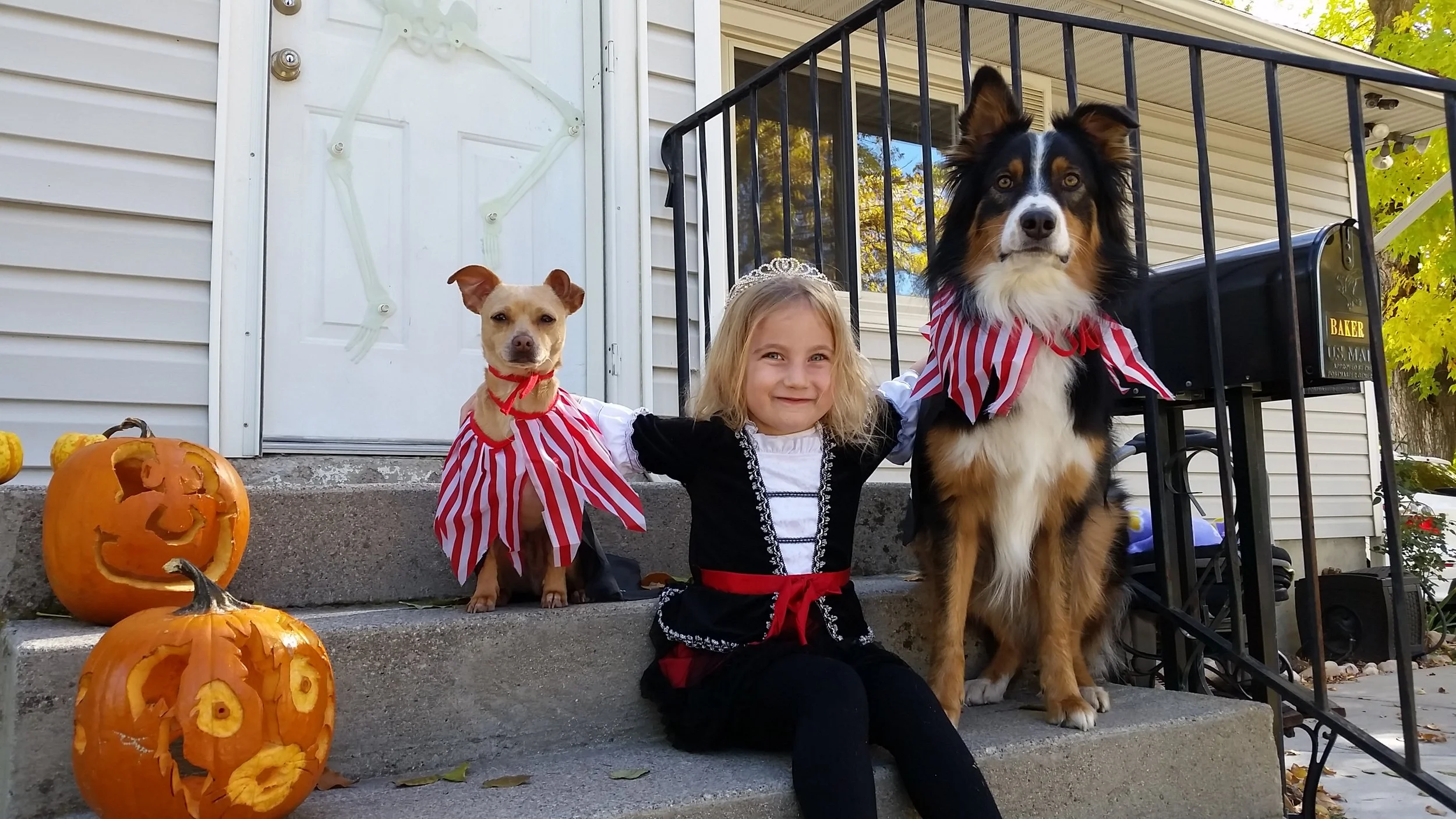
Prepare Your Dog For Halloween
Halloween Doesn’t Have to Be Scary
Halloween is an exciting time for families. There are costumes, decorations, candy, and lots of neighborhood kids running from house to house. But while we see the fun, our dogs may see a very different picture!
Imagine being a dog who is used to a quiet evening at home. Suddenly, the doorbell keeps ringing, strangers appear wearing strange masks and costumes, people are making unusual noises, and tempting treats are falling onto the ground. It’s a lot to process!
The good news is that Halloween doesn’t have to be scary for your pet. With a little preparation, consistent training, and a plan for keeping your dog safe, you can help make the evening much less stressful.
Here are three important skills to work on before Halloween arrives.
1. Teach Your Dog to Stay Calm at the Door
For many dogs, the doorbell is a signal that something exciting is about to happen. Some bark nonstop, jump on visitors, rush toward the door, or try to slip outside whenever the door opens.
Now imagine that happening dozens of times in one evening!
Halloween is an excellent reminder of why door manners matter. Your dog needs to learn that a knock or doorbell doesn’t mean they get to rush the entrance or decide how to greet every visitor.
What can you practice?
Practice with the doorbell. Ring it when you aren’t expecting visitors and reward your dog for remaining calm.
Give your dog a job. Teach them to go to a designated bed, mat, or place when the doorbell rings.
Practice opening the door. Work on keeping your dog in their designated spot while you approach and open the door.
Build up gradually. Start with quiet practice sessions and add more realistic distractions as your dog improves.
Use management when needed. A baby gate, closed door, crate, or separate room can help prevent rushing and escaping.
Remember, the goal isn’t necessarily to make your dog completely silent. It’s to help them remain safe, manageable, and calm enough to respond to you.
If your dog is fearful, highly reactive, or likely to bolt through an open door, don’t rely on training alone during a busy trick-or-treating night. Secure your dog in a comfortable, quiet area before the visitors begin arriving.
2. Help Your Dog Feel Comfortable Around Costumes and Scary Decorations
Dogs don’t understand Halloween the way we do. A child wearing a mask, a person covered in a long cape, or someone walking with an unusual silhouette may look unfamiliar or threatening to them.
Even a friendly dog can become nervous when people look, move, or sound different from what they’re used to.
This is where gradual exposure and positive associations can help.
How to prepare your dog:
Introduce costumes one at a time in a calm environment.
Let your dog observe masks, hats, capes, and other unusual items from a comfortable distance.
Pair the sight of unfamiliar objects with treats, praise, or another positive experience.
Gradually practice around different sounds and movements, without overwhelming your dog.
Watch your dog’s body language and give them space if they become uncomfortable.
Look for signs of stress, such as lip licking, yawning when not tired, turning away, a tucked tail, freezing, or trying to hide. Growling is also an important warning signal that should be respected, not punished.
Don’t force your dog to approach a person in a costume or allow children to crowd them. The goal is to help your dog feel safe, not to make them tolerate something that frightens them.
Important: Desensitization takes time. If your dog is already afraid of strangers, masks, or unusual noises, begin with very mild exposure and work at your dog’s pace. Halloween night itself is not the time to test how much they can handle.
3. Teach Your Dog Not to Eat Things Off the Ground Without Permission
This is one of the most important safety skills you can teach your dog, and it’s useful far beyond Halloween.
During trick-or-treating, candy, wrappers, dropped food, and other objects can end up on sidewalks, driveways, and lawns. A dog who grabs everything they find may swallow something before you even realize it’s there.
Chocolate can be toxic to dogs, and sugar-free candy containing xylitol can be extremely dangerous. Candy wrappers, lollipop sticks, and other discarded items can also cause choking or digestive problems.
What should your dog learn?
“Leave it.” Teach your dog to disengage from an item and turn their attention back to you.
Check in with you. Reward your dog for looking at you when they notice something tempting.
Wait for permission. Practice having your dog wait while you decide whether something is safe to eat.
Walk past distractions. Gradually practice around safe food distractions in controlled settings.
Trade instead of grabbing. Teach your dog to willingly release an item in exchange for something appropriate.
Start indoors with easy exercises and gradually increase the difficulty. Reward your dog for making good choices.
Keep in mind that “leave it” is not a guarantee that your dog will never grab something. During Halloween walks, keep your dog on a leash, scan the ground ahead, and avoid areas with lots of discarded candy.
If your dog swallows potentially dangerous candy or another hazardous item, contact your veterinarian or an animal poison-control service promptly. Don’t wait for symptoms to appear or induce vomiting unless a veterinary professional instructs you to do so.
Don’t Forget: Management Is Part of Good Training
Even a well-trained dog may struggle when faced with an unusually busy, exciting environment.
You don’t have to keep your dog at the front door all evening to prove that their training is working. In fact, giving them a quiet place to relax may be the best choice.
Consider providing:
A comfortable room away from the front door.
Fresh water and a familiar bed.
A safe enrichment toy or food puzzle, if appropriate for your dog.
A secure barrier to prevent accidental escapes.
A peaceful environment away from loud noises and constant activity.
Make sure children know not to enter the dog’s space, disturb them while resting, or offer them candy.
If you’re taking your dog trick-or-treating, use a secure leash and properly fitted collar or harness, bring identification, and choose a route that suits your dog’s confidence and experience.
A Little Preparation Goes a Long Way
Halloween is a great opportunity to remember that good manners, impulse control, and confidence aren’t skills dogs automatically know. They develop through practice, consistency, and clear communication.
Start working on door manners before the doorbell rings all evening. Introduce unfamiliar sights and sounds gradually. Practice leaving items alone rather than grabbing them off the ground.
And most importantly, pay attention to your individual dog. Some dogs love the extra activity, while others are happiest relaxing in a quiet room.
The goal isn’t to have the perfect Halloween dog. It’s to help your dog feel safe, make better choices, and enjoy the holiday in a way that works for them.
Train before the tricks and treats begin, and have a safe and happy Halloween!
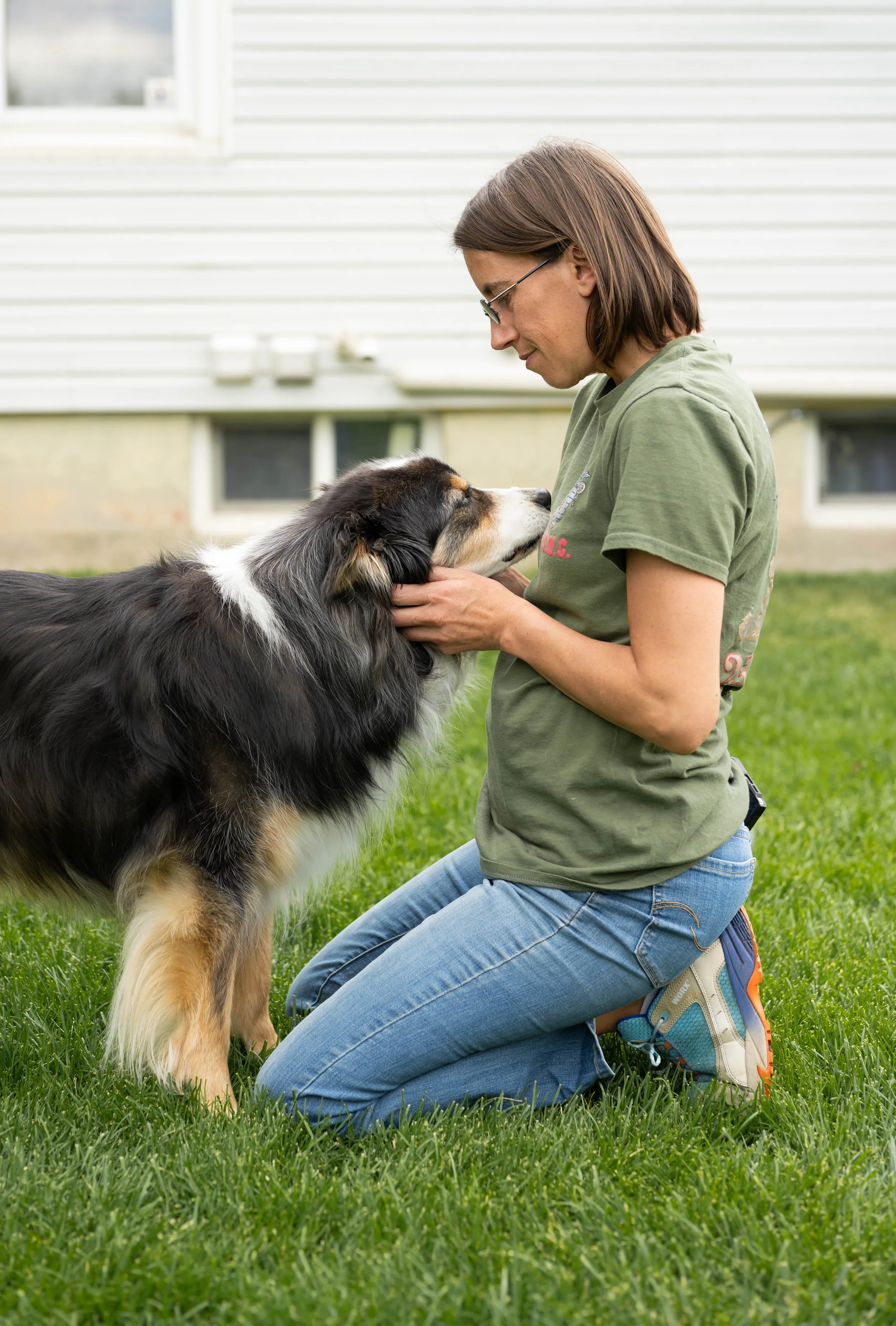
Patience: One of the Most Important Tools in Dog Training
Training isn’t just about teaching your dog. You are also learning how to communicate with your dog.
You have to be patient while your dog figures out what you are asking, but you also have to be patient while you learn how your dog learns best.
Teaching a dog a new skill takes more than simply showing them what you want and expecting them to understand. One of the most important things we can bring to training is patience.
Think about it from your dog’s perspective: they have no idea what you are asking them to do. We may know exactly what we want them to do, but our dog has to figure it out through trial and error.
Sometimes that process is messy.
Your dog may try sitting, lying down, pawing at you, looking away, or offering every other behavior they know has made you happy in the past. They aren’t necessarily being stubborn or refusing to listen. They may simply be trying to figure out, “What does my person want me to do?”
That is where our patience becomes so important.
Your dog is learning, too
Training isn’t just about teaching your dog. You are also learning how to communicate with your dog.
You have to be patient while your dog figures out what you are asking, but you also have to be patient while you learn how your dog learns best.
Every dog is different. Some pick things up quickly. Others need more repetition. Some become frustrated easily, while others will keep trying anything and everything until they finally find the answer.
When your dog is confused, our first instinct can sometimes be to become frustrated.
But frustration doesn’t help your dog understand.
If we tense up, raise our voice, become impatient, or start expecting too much too quickly, our dogs can sense that change in us. That stress can make it harder for them to think, focus, and keep trying.
Keep it short and fun
One of the best things you can do when teaching a new skill is to keep the training session short, positive, and successful.
You don’t need to spend 30 minutes practicing one behavior. In fact, doing so may create frustration for both of you.
Work for a few minutes. Give your dog opportunities to succeed. Reward the moments when they get it right, and then take a break.
And whenever possible, end on a good note.
You want your dog to walk away thinking, “That was fun! I want to do that again.”
Give your dog room to figure it out
Sometimes the biggest mistake we make in training is giving our dog the answer too quickly.
If we constantly guide, correct, or repeat the command, our dog may never get the opportunity to actually think through the problem.
Give them a moment.
Let them try.
If they make a mistake, calmly help them reset and try again.
Remember that the goal isn’t just to get your dog to perform a behavior. The goal is to help them understand what you are asking.
Training takes communication, consistency, and patience from both sides of the leash.
Your dog isn’t born knowing how to live in our human world. They are learning what our words mean, what our expectations are, and how to communicate with us.
So when your dog is struggling with a new skill, take a breath and remember:
They aren’t trying to frustrate you. They’re trying to figure you out.
Be patient. Stay calm. Keep it fun. Celebrate the little successes.
Those small moments of understanding are where the real progress happens.
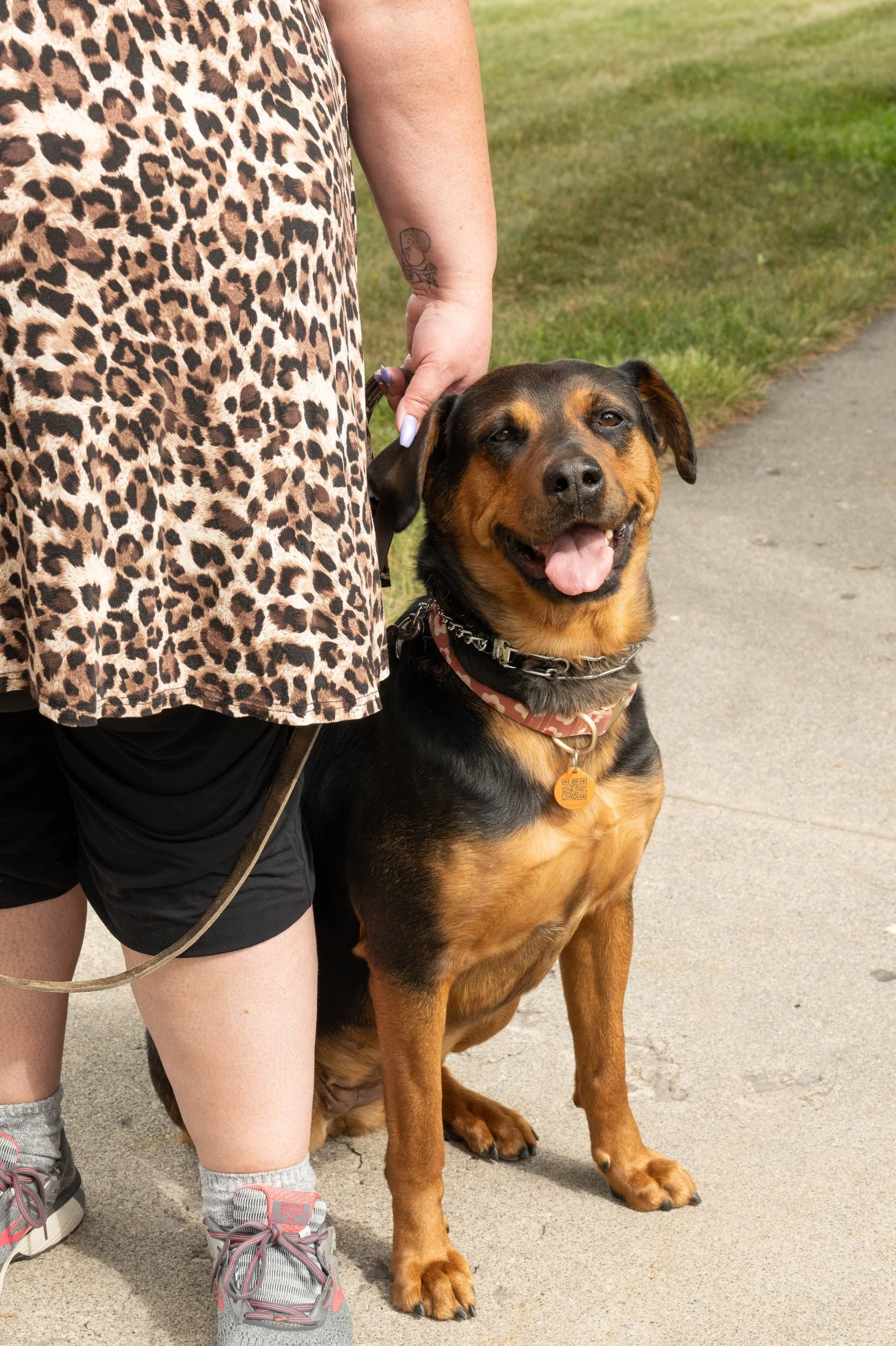
Stop Walking Beside Your Dog—Start Walking With Them
Have you ever taken your dog for a walk and felt like you were living in two completely different worlds?
You’re trying to walk down the sidewalk while your dog is pulling toward every smell, watching everything around them, stopping whenever they want, and completely forgetting you’re on the other end of the leash.
You’re walking together, but you aren’t necessarily connected.
A walk shouldn’t just be about getting your dog from one place to another or wearing them out. It’s one of the best opportunities you have to practice communication, boundaries, impulse control, and trust.
The goal isn’t to make your dog ignore the world around them. Dogs should sniff. Dogs should explore. Dogs should enjoy their walk.
The goal is to teach your dog that you are part of their world, too.
Start With Connection
Before worrying about perfect heelwork or having your dog glued to your side, start by teaching your dog to notice you.
Take a few steps and see if your dog naturally checks in with you. When they look at you, come back toward you, or choose to follow your movement, acknowledge it.
You can use praise, a treat, or whatever reward motivates your dog.
You’re teaching them: “Paying attention to my person is a good thing.”
You don’t need to constantly call your dog’s name. In fact, one of the most valuable things you can teach is for your dog to choose to check in with you without being asked.
Practice Changing Direction
One simple exercise is changing direction.
Instead of allowing your dog to decide where the walk goes, occasionally change your direction. Turn left. Turn right. Slow down. Stop.
Your dog should learn to notice what you are doing and follow your movement.
If your dog doesn’t notice at first, don’t get frustrated. Give them a chance to figure it out.
You’re creating a habit of paying attention to you.
Eventually, your dog begins to think: “I wonder what my person is doing.”
That little thought is the beginning of connection.
Let Your Dog Sniff—But Make It Part of the Conversation
A connected walk does not mean your dog has to heel for the entire walk.
Sniffing is important. Exploring is important. Your dog experiences the world through their nose, and allowing appropriate opportunities to sniff can make walks more enjoyable and enriching.
But there is a difference between your dog deciding everything that happens on the walk and you intentionally giving them freedom.
Try creating a rhythm: Walk together → check in → explore/sniff → come back together → continue walking.
You are teaching your dog that freedom comes with communication.
They can enjoy the environment without disconnecting from you.
Practice Around Distractions
This is where your relationship really starts to grow.
When you see another dog, person, squirrel, bicycle, or other exciting distraction, don’t wait until your dog is already completely overwhelmed.
Create some distance and work on getting their attention before they reach that point.
Reward your dog for noticing the distraction and then coming back to you.
You’re teaching them: “I can see exciting things without losing my mind over them.”
And even more importantly: “When I don’t know what to do, I can look to my person.”
That is a valuable skill far beyond the walk.
Remember: You’re Building a Relationship
It’s easy to think of dog training as a list of commands.
Sit.
Stay.
Come.
Heel.
But training is really about communication.
Every interaction you have with your dog teaches them something about your relationship.
If your dog learns that you consistently communicate clearly, follow through, provide structure, and still allow them to be a dog, they begin to understand what they can expect from you.
And when your dog understands what they can expect from you, trust grows.
That’s why a connected walk can have an impact far beyond your front door.
The dog who learns to check in with you on a walk is practicing checking in with you at home.
The dog who learns to follow your direction around distractions is practicing listening when life gets exciting.
The dog who learns that boundaries are consistent on the sidewalk begins to understand that boundaries are consistent inside the house, too.
Don’t Aim for a Perfect Walk
Your walk doesn’t need to look perfect.
Your dog doesn’t need to be in a perfect heel the entire time.
There will be distractions. There will be moments when your dog gets excited. There will be days when things don’t go as planned.
That’s okay.
Instead of asking, “Is my dog walking perfectly?”
Ask: “Are we communicating?”
Is your dog checking in with you?
Can you change direction and have them follow?
Can you get their attention around distractions?
Can they enjoy sniffing and exploring and then reconnect with you?
If the answer is becoming “yes,” you’re making progress.
Because the goal isn’t simply to have a dog who walks nicely on a leash.
The goal is to have a dog who understands that you are their partner as they move through the world.
You’re not walking two separate paths while holding the same leash.
You’re learning to walk together. 🐾
Want to practice a connecting walk under the guidance of a dog trainer? Join us for Pack Walk!
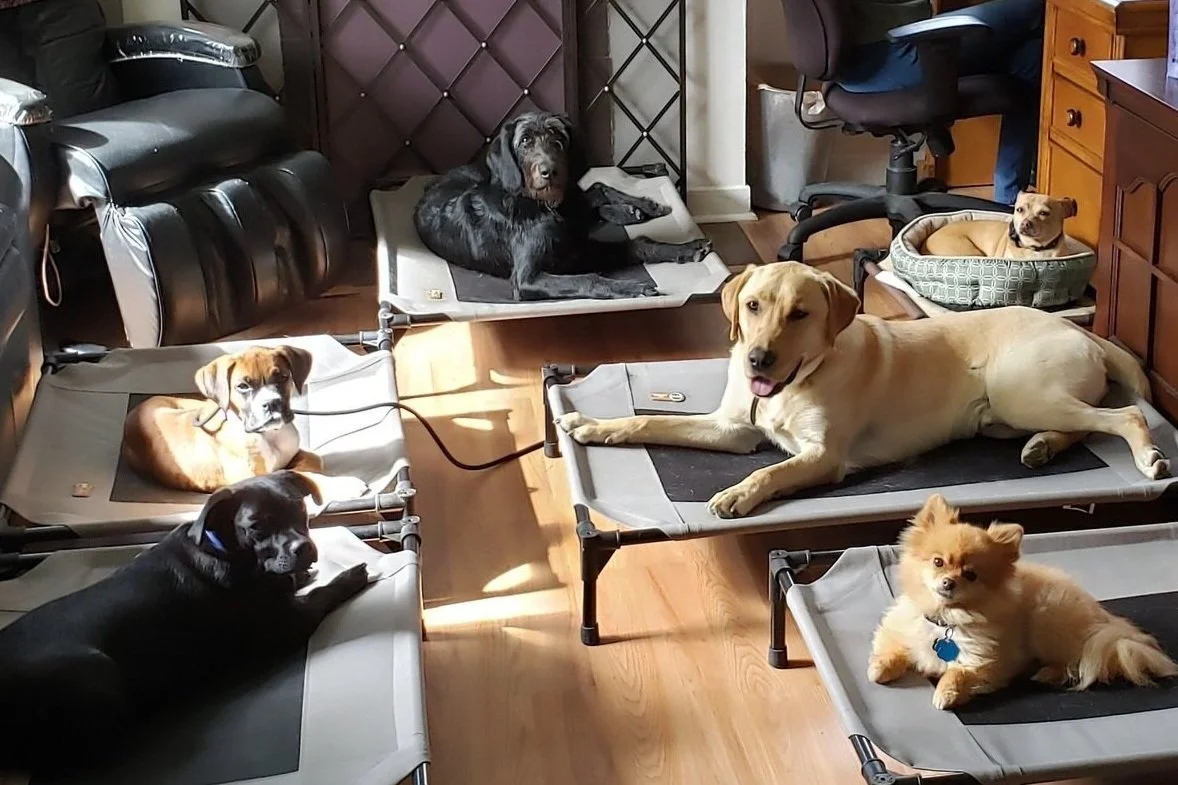
TRAINING VIDEO: How To Teach Your Dog Self Control
Your dog is capable of more than you give them credit for. Raise the bar and hold them accountable to be better, well-mannered, contributing members of society. If your dog's impulse control has slackened, here's some homework to follow up on.
In this one video you'll see how we teach these dogs:
self-control,
patience,
good table manners,
and to wait their turn.
If your dog's impulse control has slackened, here's some homework:
Step 1: Get some treats or your dog's daily food.
Step 2: Wait for your dog to show proper etiquette: quiet, calm, soft but direct eye-contact.
Step 3: Offer the food, but be ready to refuse it if your dog breaks etiquette, i.e.: barks or whines, jumps up or grabs at the food in your hand, gets distracted or demanding.
Step 4: If they maintain good manners, let them eat the treat in peace and skip to Step 6.
Step 5: If they break etiquette, take back the treat and say "eh eh" and start back at Step 1. Repeat as necessary until your dog shows good manners.
Step 6: Apply these steps to every aspect of your life with your dog, i.e.: getting the leash on to go for a walk, heading out the door, making dinner, greeting you when you get home from work or school, walking around the block.
Your dog is capable of more than what you give them credit for. Raise the bar and hold them accountable to be better, well-mannered, contributing members of society.
If you have more questions or curiosities about training, please, book a free consultation!
Comment below with what you've done to help your dog with self control or share with a friend who needs help.
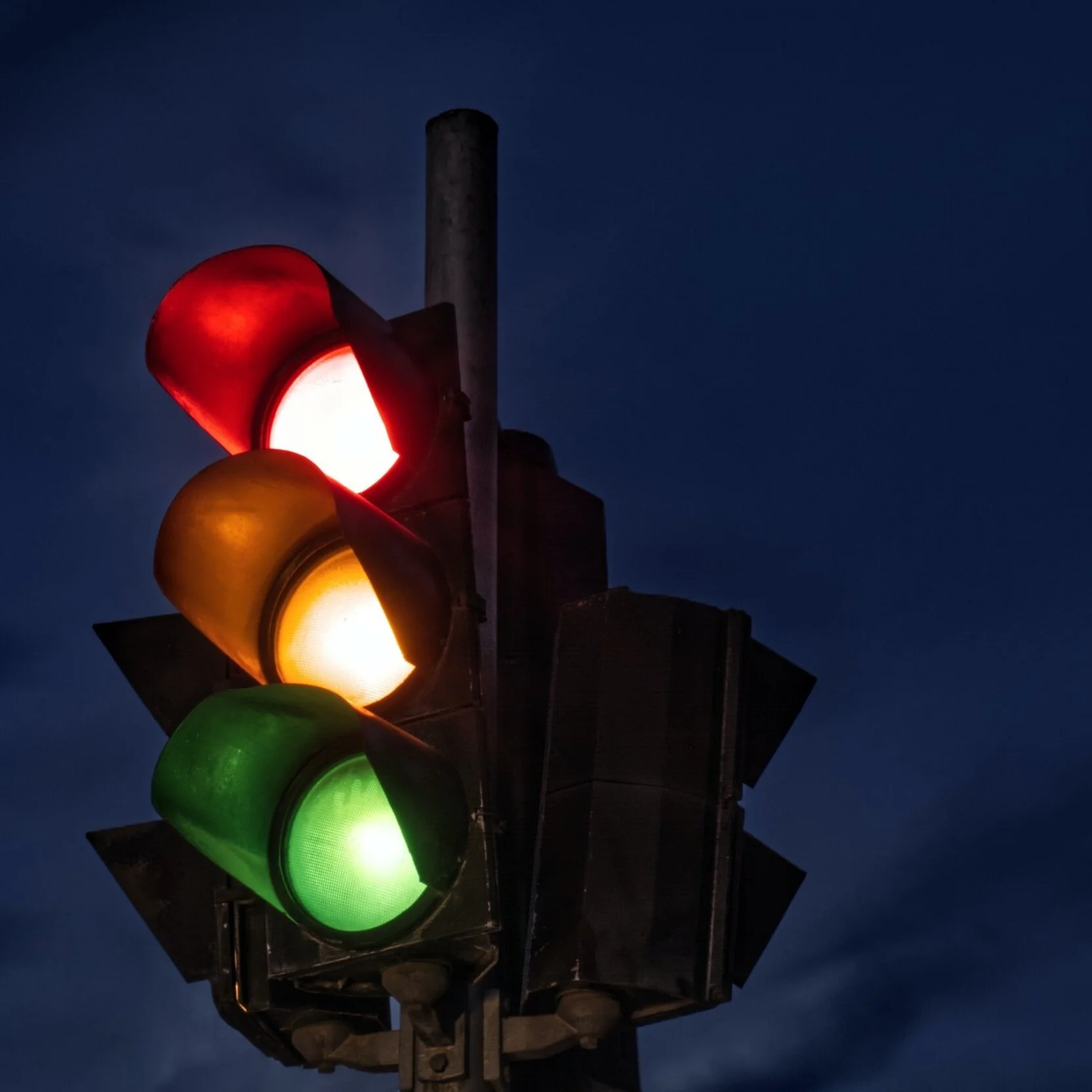
The Traffic Light Principle
As you pull up to the traffic light, it switches from green to yellow.
What do you do?
Keep going and hope you make it through the intersection before it turns red, taking a chance that you won’t hit someone or someone else won’t hit you?
Or do you stop and wait for the light to turn back to green?
As you pull up to the traffic light, it switches from green to yellow.
What do you do?
Keep going and hope you make it through the intersection before it turns red, taking a chance that you won’t hit someone or someone else won’t hit you?
Or do you stop and wait for the light to turn back to green?
As long as the light is green, you know you can keep going with little to no consequences other than getting to where you want to go within the timeframe you planned. But when the light changes from green to yellow, now you must make a choice. If you stop, you might be late. If you speed through, you might get pulled over if you’re caught or you might cause a fatal accident. It is in that moment of choice that true teaching happens.
Training your dog is like a traffic light
Green light means “you’re doing great, keep doing what you’re doing.” This is the positive side of dog training, the 90% when we reward our dogs for good behavior, usually in the form of treats, toys, affection, and “good boy”.
Yellow light means “caution, you might want to stop and think about what you are doing.” This is the negative side of dog training, the 9% when we teach our dogs to think before they act and give them constructive, informative, and corrective feedback to change their behavior before they do something they or we will regret.
Red light means “STOP NOW or you will face the consequences.” This is the non-negotiable side of dog training, the 1% when we must stop bad behavior that will harm our dogs or others.
When your dog pulls up to the traffic light and it switches from green to yellow or yellow to red, keep this mantra in mind: “Be as fair as you can be, but as firm as you need to be.”

Will my dog listen without the e-collar?
Hey Sara, do you know if there’s a way to have a dog not be e-collar savvy? My dogs do behave better when they know their e-collars are on, but is there ever a time when they don’t need it anymore or is there a way to get them to listen without it?
QUESTION
Hi Sara! I hope you’re having a beautiful day today. I have a question that I’d like to hear your perspective.
Do you know if there’s a way to have a dog not be e-collar savvy? My dogs do behave better when they know their e-collars are on, but is there ever a time when they don’t need it anymore or is there a way to get them to listen without it?
ANSWER
Hey […]! Let me see if I understand your question.
Can a dog eventually be reliable and trustworthy without the e-collar on? Or, can you ever prevent dogs from becoming e-collar savvy?
The answer to the first question is yes. Humans have been teaching dogs for eons without e-collars. However, for the best results you should start early during the imprinting stage, and it typically takes 10 times as long and even then there is always a slight 1% chance your dog will decide it's worth it to give you the middle finger.
The answer to the second question is “maybe”, but most likely “no”. Take our own behavior for example. Why do we drive 5-20 mph over the speed limit when we all know it's against the law, but drive 5-10 mph under the speed limit when there's a highway patrolman in sight?
Just let that sink in. And I'll leave the decision to use or keep using the ecollar up to you.
Free Feeding or Scheduled Feeding?
These are a few reasons why scheduled feeding is far better than free feeding that I have personally seen with my dog owners and my own dogs…
This is a hot and sometimes divisive topic that typically comes up during discussions with my dog owners at the first or second lesson.
Some are adamant that their dog be allowed to eat whenever and whatever he wants just like their children or grandchildren. If that's your cup of tea, then great! Continue doing what you're doing. But these people generally contact me because their dog has a bad habit or behavior that annoys or severely inhibits their home and lifestyle.
So, I help them take back control over what they can control as quickly as possible. Managing meal times is the first and easiest thing you can do to make immediate changes in your home without too much effort.
These are a few reasons why scheduled feeding is far better than free feeding that I have personally seen with my dog owners and my own dogs:
it makes potty training easier, if you can regulate when it goes in, you regulate when it comes out and how often!
dogs digestive tracks are not meant to have food constantly going through them. They are predators and scavengers, only eating when given the opportunity. Therefore their systems are built for scarcity not abundance. They have a predator's (think gorging) gut, not a prey's (think grazers) gut.
it's easier and quicker to tell if your dog has a medical or dental issue. If my dogs don't immediately eat all of their food, I know something is wrong.
sanitation, while most dogs don't have adverse reactions to dirty dishes and food that's been left out for most of the day, there is always a risk of spreading illness and attracting pests. Feeding on a schedule automatically gives you the opportunity to remove the dog dishes and clean them between feedings.
eliminates picky eaters. Why should the dog eat his food right away when he can nibble at it anytime he wants or beg for much better and more delicious food from the dining room table or countertop?
"dogs won't bite the hands that feed them." Whether you believe this old adage or not, there is a great tasting benefit to scheduling feedings. If your dog recognizes you as the source of their food and water, they are more likely to listen to you. If food is always available, what role do you play on your dog's life? Nothing more than entertainment and the mode of going out for a walk.
A note about puppies, tiny teacup dogs, and dogs with medical issues, use your best judgement. If your dog has a serious illness or diabetes or difficult time keeping weight on, then obviously feed your dog according to your vet's recommendations. These ideas have helped most of my clients solve every day, nagging behavioral issues and conquered the potty training dilemma.
My hope with this post is that you will gain some perspective and make a better informed decision whether you should continue free feeding or switch to scheduled feedings.

6 Steps to Better Communication With Your Dog
When communicating with someone who speaks a different language, it’s helpful to learn their language to help them understand you!
- Article Written by Bakers Acres Founder: Sara Baker, owner of Bakers Acres K9 Academy
Why our dogs don’t listen
“Buddy, come!” “Come...” “Come! Come here!” “Buddy!!! COME!!!”
We have all found ourselves in this situation or one similar to it. It is so frustrating and sometimes terrifying! And oftentimes gets our dogs into a lot of trouble or danger if they don’t listen.
But why does this happen so often?
The problem lies in the fact that our dogs are dogs...not humans. Let me say that again. Dogs aren’t human!!! Dogs are a different species and as such they speak a different language. When communicating with someone who speaks a different language, it’s helpful to learn their language to help them understand you!
What can we do to help our dogs understand us?
As with all relationships, communication is the key! Learning HOW an individual communicates is even more crucial.
Dogs rarely communicate verbally, or vocally. For instance, they only make noise when they’re demanding attention, hyper, anxious, afraid, or aggressive. Other than that, they’re quiet. Or they should be. A happy, healthy dog, is a quiet dog. They speak more with their bodies than their voices. So, if you want your dog to understand “human” you need to first speak “dog”.
STEP 1: Be calm
Take a deep breath. Relax. Are you ready? If you’re frustrated, angry, upset, or scared, pause a second to gather your wits. In the event of an emergency, just don’t say anything. Loud, scared, emotional voices often create or add to the problem. It’s better to remain silent.
STEP 2: Get your dog’s attention
Say their name in a friendly, yet assertive voice. Think of your Grandma and the respect she deserves. Be Grandma.
STEP 3: Speak clearly
Use one word for a specific command and only use that word for that command or context. For example, sometimes we slip up and say “down” when we really want our dog to get “down” off the couch. Differentiate the two commands by choosing a word that means “to lay down” (we like the word “DOWN”) and a correction that means “to get off” (we use the word "OFF").
STEP 4: Give one command and wait
Allow your dog time to hear, understand, and comply with the command. Silence and patience are golden. Repeating the command or saying anything at all can actually cause confusion and your dog will probably just walk away or join in the “barking!” Avoid repeating the command unless it will add clarity.
STEP 5: Follow through until your dog complies
If they turn away to avoid doing what you’ve asked, or something else grabs their attention, say “nope” and bring them back to start over at Step 1.
STEP 6: Throw a party!!!!
When your dog understand and listens, throw a party! Give them a treat! Sing their praises! Show them what a good dog they’ve been.
BONUS MATERIAL
We recommend commands with 1 word, 1 syllable, and a strong vowel sound.
SIT (instead of sit down),
DOWN (instead of lay or lay down),
COME (instead of here or come here),
PLACE (instead of bed or get on your place),
OFF (instead of down when commanding to get off of or down from something),
OUT (instead of drop it or release),
CRATE (instead of kennel or bed)
GET IN (load up in the car)
We love using marker words while actively training or interacting with our dogs.
"Good" means keep doing what you're doing.
"Yes" means good you completed that task, take a brief break before starting a new one.
"Break" means we're all done, go have some fun.
"Nope" means that's not what I wanted. Try again.
"No" means NO! Don't ever do that again.

The Result of Remote Collar Training
Responsible, humane, remote collar training can save lives and bring fulfillment.
The Results of Responsible Remote Collar Training Are Boundless
Because of responsible remote collar training, we can take our dogs anywhere! One of their favorite places is the playground. If you have a high energy dog, get them trained on an ecollar so you can enjoy off leash excursions like this!
Starring: Bandit (Australian Shepherd) and Chico (Chiweenie)

Rules & Boundaries = Respect & Freedom
Dogs thrive on structure and boundaries. When rules are absent, dominant dogs naturally become the leader and take over while submissive dogs become anxious and overwhelmed with the responsibility of leadership...
Dogs thrive on structure and boundaries. When rules are absent, dominant dogs naturally become the leader and take over while submissive dogs become anxious and overwhelmed with the responsibility of leadership. Both scenarios create annoying and many times destructive behaviors. What many dog owners perceive as stubbornness or hyperactivity is really dominance and/or anxiety overblown! Establishing rules, boundaries and limitations in the home and in public will resolve or prevent these bad behaviors.