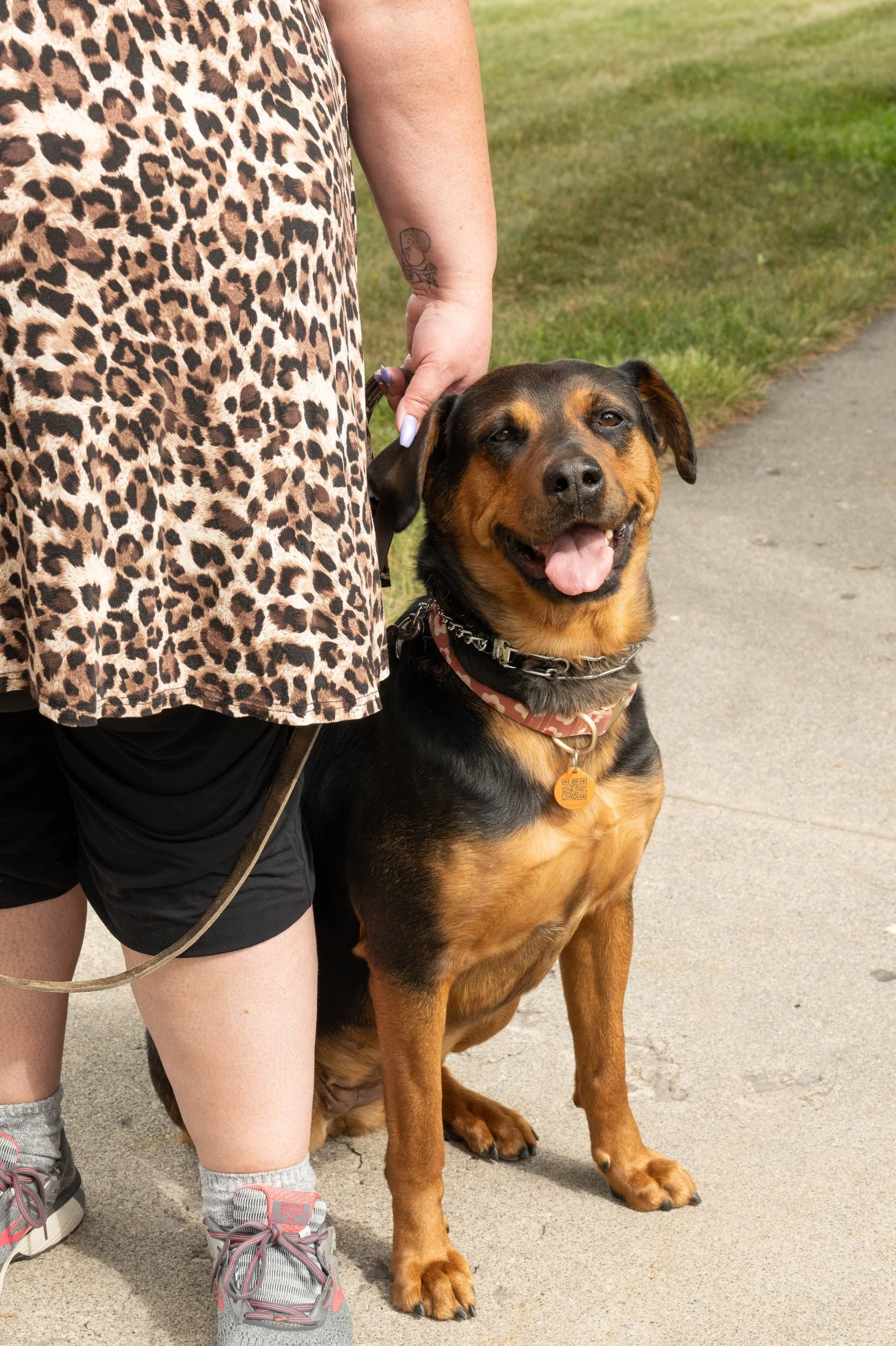
Stop Walking Beside Your Dog—Start Walking With Them
Have you ever taken your dog for a walk and felt like you were living in two completely different worlds?
You’re trying to walk down the sidewalk while your dog is pulling toward every smell, watching everything around them, stopping whenever they want, and completely forgetting you’re on the other end of the leash.
You’re walking together, but you aren’t necessarily connected.
A walk shouldn’t just be about getting your dog from one place to another or wearing them out. It’s one of the best opportunities you have to practice communication, boundaries, impulse control, and trust.
The goal isn’t to make your dog ignore the world around them. Dogs should sniff. Dogs should explore. Dogs should enjoy their walk.
The goal is to teach your dog that you are part of their world, too.
Start With Connection
Before worrying about perfect heelwork or having your dog glued to your side, start by teaching your dog to notice you.
Take a few steps and see if your dog naturally checks in with you. When they look at you, come back toward you, or choose to follow your movement, acknowledge it.
You can use praise, a treat, or whatever reward motivates your dog.
You’re teaching them: “Paying attention to my person is a good thing.”
You don’t need to constantly call your dog’s name. In fact, one of the most valuable things you can teach is for your dog to choose to check in with you without being asked.
Practice Changing Direction
One simple exercise is changing direction.
Instead of allowing your dog to decide where the walk goes, occasionally change your direction. Turn left. Turn right. Slow down. Stop.
Your dog should learn to notice what you are doing and follow your movement.
If your dog doesn’t notice at first, don’t get frustrated. Give them a chance to figure it out.
You’re creating a habit of paying attention to you.
Eventually, your dog begins to think: “I wonder what my person is doing.”
That little thought is the beginning of connection.
Let Your Dog Sniff—But Make It Part of the Conversation
A connected walk does not mean your dog has to heel for the entire walk.
Sniffing is important. Exploring is important. Your dog experiences the world through their nose, and allowing appropriate opportunities to sniff can make walks more enjoyable and enriching.
But there is a difference between your dog deciding everything that happens on the walk and you intentionally giving them freedom.
Try creating a rhythm: Walk together → check in → explore/sniff → come back together → continue walking.
You are teaching your dog that freedom comes with communication.
They can enjoy the environment without disconnecting from you.
Practice Around Distractions
This is where your relationship really starts to grow.
When you see another dog, person, squirrel, bicycle, or other exciting distraction, don’t wait until your dog is already completely overwhelmed.
Create some distance and work on getting their attention before they reach that point.
Reward your dog for noticing the distraction and then coming back to you.
You’re teaching them: “I can see exciting things without losing my mind over them.”
And even more importantly: “When I don’t know what to do, I can look to my person.”
That is a valuable skill far beyond the walk.
Remember: You’re Building a Relationship
It’s easy to think of dog training as a list of commands.
Sit.
Stay.
Come.
Heel.
But training is really about communication.
Every interaction you have with your dog teaches them something about your relationship.
If your dog learns that you consistently communicate clearly, follow through, provide structure, and still allow them to be a dog, they begin to understand what they can expect from you.
And when your dog understands what they can expect from you, trust grows.
That’s why a connected walk can have an impact far beyond your front door.
The dog who learns to check in with you on a walk is practicing checking in with you at home.
The dog who learns to follow your direction around distractions is practicing listening when life gets exciting.
The dog who learns that boundaries are consistent on the sidewalk begins to understand that boundaries are consistent inside the house, too.
Don’t Aim for a Perfect Walk
Your walk doesn’t need to look perfect.
Your dog doesn’t need to be in a perfect heel the entire time.
There will be distractions. There will be moments when your dog gets excited. There will be days when things don’t go as planned.
That’s okay.
Instead of asking, “Is my dog walking perfectly?”
Ask: “Are we communicating?”
Is your dog checking in with you?
Can you change direction and have them follow?
Can you get their attention around distractions?
Can they enjoy sniffing and exploring and then reconnect with you?
If the answer is becoming “yes,” you’re making progress.
Because the goal isn’t simply to have a dog who walks nicely on a leash.
The goal is to have a dog who understands that you are their partner as they move through the world.
You’re not walking two separate paths while holding the same leash.
You’re learning to walk together. 🐾
Want to practice a connecting walk under the guidance of a dog trainer? Join us for Pack Walk!